Iran Lobby

Exposing the Activities of the lobbies and appeasers of the Mullah's Dictatorship ruling Iran

  • Home
  • About
  • Current Trend
  • National Iranian-American Council(NIAC)
    • Bogus Memberships
    • Survey
    • Lobbying
    • Iranians for International Cooperation
    • Defamation Lawsuit
    • People’s Mojahedin
    • Trita Parsi Biography
    • Parsi/Namazi Lobbying Plan
    • Parsi Links to Namazi& Iranian Regime
    • Namazi, NIAC Ringleader
    • Collaborating with Iran’s Ambassador
  • The Appeasers
    • Gary Sick
    • Flynt Leverett & Hillary Mann Leverett
    • Baroness Nicholson
  • Blog
  • Links
  • Media Reports

Warnings Not to Soften on Iran Regime Mount

July 14, 2017 by admin

Warnings Not to Soften on Iran Regime Mount

Warnings Not to Soften on Iran Regime Mount

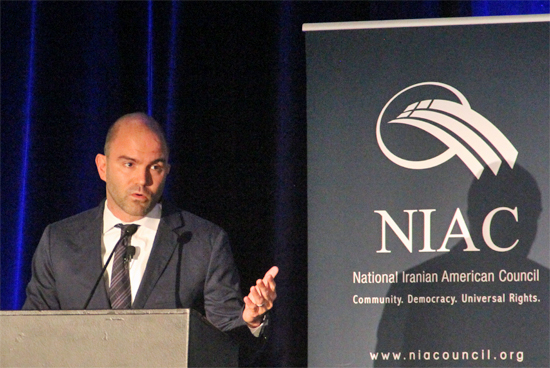
One of the more interesting aspects of the transition in the White House has been the lack of support the Iran lobby receives. During the Obama administration, key Iran lobbyists such as Trita Parsi of the National Iranian American Council had almost unfettered access to the White House; visiting as often as insurance lobbyists during the Obamacare debate.

Key administration staffers helped construct the much-debated “echo chamber” to lend support for the debate about the Iran nuclear deal and help influence the news media with so-called strategic analysts to place editorials and appear on newscasts promoting the agreement.

Even former NIAC staffers were hired to fill key positions in the State Department and National Security Council much to the consternation of long-time critics of the Iranian regime who warned of the conflicts of interest stemming from having staffers with close ties to the Iranian regime overseeing U.S. policy on Iran.

The changeover in administrations not only significantly reduced the influence and clout of the Iran lobby, it also encouraged closer scrutiny and questioning of not only the Iran lobby’s positions, but also the thinking that went into the appeasement policies of the Obama administration.

The world has had the benefit of hindsight after two years since the nuclear deal was signed and has clearly seen that the Iranian regime is now the most destabilizing force in the Middle East with the eruption of proxy wars, terror incidents and deployments of new weapons on a large scale.

The laundry list of Iranian actions reads like a butcher’s bill for chaos, including:

  • Deepening the Syrian civil war the past two years by sending thousands of fighters to support Assad and drawing Russia into the conflict, as well as supporting the use of chemical weapons used on civilians;
  • Provoking open war with Saudi Arabia by starting the Houthi rebellion in Yemen and supporting additional efforts to destabilize Bahrain;
  • Igniting a border conflict with Pakistan that recently escalated to lobbing rockets and mortar shells at each other;
  • Spark the collapse of the Sunni-Shia coalition government in Iraq, thereby driving disenfranchised Sunni tribes to support ISIS leading to the fall of Mosul and giving ISIS its first stronghold to build on; and
  • Launch a massive development program to build a ballistic missile fleet with heavier payloads and intercontinental range, as well as use them for the first time in firing at targets in Syria; and
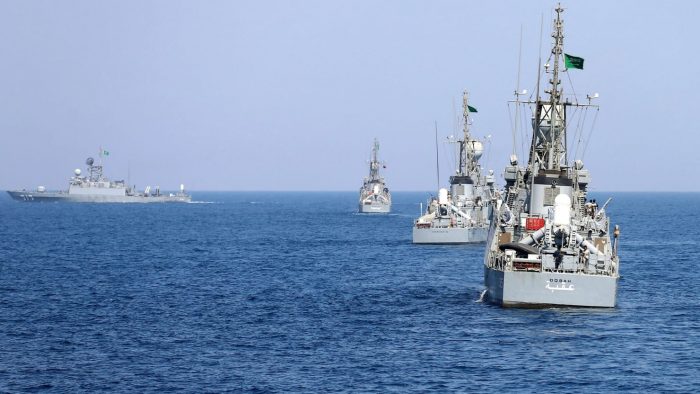
  • Deploy its military aggressively, including its navy to threaten international shipping lanes in the Persian Gulf, Indian Ocean, Gulf of Aden and Suez Canal.

The proof of how false the Iran lobby’s arguments were has been on display the past two years and there is little debate about Iran being at the center of the woes besetting the region. This has led to an emboldened Iranian resistance movement, as well as open criticism of Iran with little defense of the regime from the Iran lobby.

The wave of social media posts, editorial commentary and press releases by groups such as NIAC have fallen precipitously as Iran’s actions have clearly blown them out of the water, though are now trying to prevent policy changes against the regime, namely the black listing of the Islamic Revolutionary Guards Corps, the main vehicle behind its terrorist activities and its interferences in Iraq, Syria, Yemen, etc.

That criticism is now coming from all quarters as the Iranian opposition movement has gathered steam—culminating in the massive rally in Paris of the leading Iranian dissident groups totaling over 100,000 people with a global parade of nations all criticizing the mullahs in Tehran earlier this month.

In the U.S. Congress, the bipartisan support for the imposition of new economic sanctions on Iranian regime for its ballistic missile program grows each day, alongside calls by Senators on the Trump administration and Secretary of State Rex Tillerson not to certify the Iranian regime being in compliance with the nuclear agreement.

“We believe that a change in that policy is long overdue,” Arkansas Republican Sen. Tom Cotton and three colleagues wrote to Tillerson in a letter Tuesday.

“In light of Iran’s malign actions since the signing of the [nuclear deal], the only reasonable conclusion is that the full suspension of U.S. sanctions is not in the vital national security interests of the United States and that Iran has consistently violated the terms of the [nuclear deal].”

Under federal law, a finding that Iran is not complying with the deal — the certification must take place every 90 days — would set the stage for “an expedited process for Congress to rapidly restore its sanctions.” Cotton and the other senators said that time has come.

They cited several violations, including Iran’s refusal to allow international inspectors to access their research and military facilities, and exceeding limits on water stocks needed to create a plutonium pathway for nuclear weapons.

Several news organizations similarly reported violations by the Iranian regime, especially in its ongoing efforts to acquire illicit nuclear technology.

Weekly Standard reporter Benjamin Weinthal revealed Friday that recent reports by German intelligence agencies show that Iran is still attempting to procure illicit nuclear technology, such as specialized valves that can be used in the heavy water reactor in Arak.

Weinthal cited a report by the state of Hamburg in northern Germany which said “there is no evidence of a complete about-face in Iran’s atomic policies in 2016” after the announcement of the U.S.-brokered nuclear deal.

Iran is still seeking “products and scientific know-how for the field of developing weapons of mass destruction as well (as) missile technology,” the report claimed.

The Hamburg report also listed “49 separate instances of Iran engaging in illegal procurement and terrorist activities, such as cyberwarfare, espionage, and support for the terrorist group Hezbollah,” according to The Tower.

Another intelligence report by the state of Baden-Württemberg described Iran’s use of foreign import-export firms to obtain equipment that can be used for illicit nuclear activities.

Additional reporting recently indicated that Iran was building additional missile manufacturing facilities in Syria which raises the ugly specter that Iran could marry its ballistic missiles with Syria’s chemical weapons stocks that were never destroyed as part of the much-maligned compromise brokered by Russia that persuaded President Obama not to cross his infamous “red line.”

The only good thing coming out of this summer may be the fact that the Iran lobby is shrinking in influence and importance and that is a positive development.

Michael Tomlinson
Filed Under: Blog, News Tagged With: Featured, Iran deal, Iran Human rights, Iran Lobby, Iran Mullahs, Iran Talks, Iran Terrorism, IRGC, National Iranian American Council, NIAC, NIAC Action, Sanctions, Trita Parsi

Iran Regime Continues to Suffer Setbacks at Home and Abroad

July 4, 2017 by admin

Iran Regime Continues to Suffer Setbacks at Home and Abroad

Iran Regime Continues to Suffer Setbacks at Home and Abroad

It must be tough to be a ruling mullah within the Iranian regime these days. Only a few months ago you must have been feeling on top of the world.

Syria was a carnal house of chaos that was diverting global attention away from all of your schemes and plots.

ISIS was busy destroying everything and everyone in its path and you got plaudits for claiming to fight them.

You had a nuclear deal in hand that flooded your depleted bank accounts with billions in cash enabling you to go on personal shopping sprees for new weapons and upgrade your ballistic missiles and you didn’t have to give anything away for it!

Your lobbying and PR machine were running an echo chamber braying loudly in support of your causes and portraying your handpicked puppet president as a paragon of moderation.

What a difference a few months make.

ISIS is being pushed back by determined Iraqi troops and Syrian rebel groups backed by U.S. forces who have now shown a willingness to shoot Iranian drones, convoys and troops if threatened.

The incoming Trump administration has openly called for and getting a legislation imposing new economic sanctions for Iran’s support for terrorism and its development of ballistic missiles.

The cash flow may soon run dry as European countries, eager to invest in Iran, are now confronted with the stark possibility of running afoul of U.S. Treasury officials.

Your latest presidential campaign where your boss, Ali Khamenei, tried to engineer the election of his hardline successor fell flat on its face.

Worst of all, the longest-running Iranian dissident group is experiencing a resurgence in support not only in many world capitals, but more distressingly on the streets of Iranian cities.

It’s enough to make a mullah want to cry, except the mullahs that control Iran and its people aren’t likely to get sentimental or panic. If anything, they will do what they have always done which is crack down on its people, engineer more attacks abroad and use its overseas lobbyists to threaten global leaders.

But that same old recipe may no longer find much traction as the ground has shifted considerably on the regime.

One big blow came when U.S. federal prosecutors won a courtroom victory in their nine-year effort to seize a midtown Manhattan office tower owned by an Iranian charity.

A jury on Wednesday found that the charity, the Alavi Foundation, was controlled by the Iranian government. It also agreed with prosecutors that the charity’s management of the Fifth Avenue office building, which has generated millions of dollars in rental income annually, constituted a violation of U.S. sanctions against Iran, according to Bloomberg.

The verdict, which came after a day of deliberations, means that Manhattan prosecutors can move ahead with their attempt to seize the building at 650 Fifth Avenue, a prime location. The government plans to sell the property, which is valued at more than $500 million, and distribute much of the proceeds to victims of Iranian regime-sponsored terrorist attacks.

The finding “represents the largest civil forfeiture jury verdict and the largest terrorism-related civil forfeiture in U.S. history,” Joon H. Kim, the acting U.S. Attorney in Manhattan, said in a statement.

In 2014, U.S. District Judge Katherine Forrest granted summary judgment to prosecutors’ forfeiture request, agreeing that the government had established that the building’s primary owners — the Alavi Foundation and a shell company controlled by the government of Iran — had been violating Iran sanctions laws since 1995.

The blow is especially big for the Iran lobby since the Alavi Foundation was a prime financial supporter of noted lobbying groups such as the National Iranian American Council and the Ploughshares Fund, both of which are likely to be crippled by the loss of cash.

This comes in contrast to the strong growth of the Iranian resistance movement within Iran, which has fought hard to stifle any news of protests from getting out, but lately those acts of defiance have grown bolder and been more publicized thanks to social media.

The National Council of Resistance of Iran (NCRI)/People’s Mujahedeen Organization of Iran (MEK) says hundreds of videos and photos of the incidents have been taken in dozens of towns and cities, and compiled a sample in a video clip.

Photos of NCRI leaders Maryam and Massoud Rajavi feature prominently, along with slogans which the NCRI translated as saying, among other things, “My vote regime change, down with Khamenei, our choice Maryam Rajavi.”

Such demonstrations are highly risky in Iran, a repressive state that has outlawed the NCRI/MEK as a “terrorist” group and executes hundreds of people each year for crimes including political and security offenses.

Shabnam Madadzadeh, a young Iranian woman and former political prisoner who just recently was able to exit Iran, has written articles and delivered remarks in different events shedding light on Iran’s dungeons atrocious conditions and gave a powerful interview to Forbes describing conditions in Iran’s prisons.

“I was a college student in Iran and like my brother I spent five years in the regime’s jails as a political prisoner. Long interrogations, solitary confinement, forced to witness my brother being beaten, deprived of any contact with my family, death threats and mock executions were the tortures I was placed through,” she said.

“During my time behind bars I was deprived of any furlough. I witnessed many crimes by the regime authorities, many executions and tortures inflicted not only on political prisoners, but also ordinary inmates arrested on other charges,” she added.

It may be time for the mullahs to pull out the tissue and have a good cry.

Laura Carnahan

Filed Under: Blog, National Iranian-American Council, News Tagged With: Alavi Foundation, Featured, Iran, Iran Human rights, Iran Lobby, Iran Mullahs, Iran Terrorism, National Iranian American Council, NIAC, NIAC Action, Ploughshares

Confrontations with Iran Escalate Throughout Middle East

June 21, 2017 by admin

Confrontations with Iran Escalate Throughout Middle East

Confrontations with Iran Escalate Throughout Middle East

Incidents involving confrontations with the Iranian regime and its proxies are beginning to sharply escalate around the Middle East as tensions are ratcheted up by the mullahs in Tehran. It is almost like a high stakes poker game with Iran upping its bets because it’s too far in with a weak hand to fold.

Most worrisome has been the rise in direct incidents with Iran and its chief rival, Saudi Arabia, as illustrated in the latest incident.

Saudi Arabia says that it captured three members of Iran’s Revolutionary Guards Corps aboard a boat approaching the kingdom’s offshore Marjan oil field.

The three “are now being questioned by Saudi authorities,” the Information and Culture Ministry said in a statement.

The vessel, seized by the Saudi Navy on June 16, was carrying explosives and intended to conduct a “terrorist act” in Saudi territorial waters, the statement said.

Saudi media earlier said that the navy had fired warning shots when three small boats entered Saudi territorial waters and headed at high speed toward the platforms.

Relations between the two countries are at their worst in years, as they support opposite sides in conflicts in Syria, Yemen and Iraq, and each accuses the other of destabilizing regional security.

The incident comes on the heels of the Iranian regime launching missiles purportedly at ISIS positions in Syria in retaliation for terror attacks in Tehran. Iran blamed Saudi Arabia for those attacks which makes this incident in Saudi waters suspicious as to whether or not Iran’s Quds Forces might have been mounting an attack against Saudi installations in response to the ISIS attack.

Meanwhile in Syria itself, open warfare seems to be breaking out as a U.S. fighter jet shot down a Syrian air force jet after it had bombed positions occupied by U.S.-backed rebel groups. This was followed by a declaration from Russian forces that U.S. warplanes would be potential targets if they attacked Russian elements.

It’s worth noting that Iran brought Russia into the Syrian conflict on behalf of the Assad regime when it was facing imminent defeat on the battlefield. That escalation has now proven to be potentially disastrous as Russian and U.S. units increasingly come close to shooting at each other.

All of this was preceded when U.S. forces opened fire on Syrian militias backed by Tehran three times in the past month. All of the incidents took place at al-Tanf, a remote desert outpost near the border with Iraq and Jordan, where U.S. and British special operations forces have been training Syrian rebel fighters.

Earlier in May, U.S. warplanes attacked a Syrian Army motorcade moving to al-Tanf. As a result of the strike, two servicemen were killed and 15 were injured. A similar incident also took place on May 18, killing six.

The series of clashes has demonstrated how the eastern Syrian desert is becoming an arena for confrontation between the U.S. and Iran, a potential flashpoint alongside Yemen. Following the attacks on Damascus positions, an operational headquarters of the allied forces of the Syrian government army threatened the U.S.-led coalition with a retaliatory strike.

The fight in Syria is becoming even more high stakes as it becomes clear that the Iranian regime has shown no intention of giving up any territory it wins from ISIS; intending to become a permanent presence there in a similar manner to how it exercises control in Iraq through Shiite militias it backs.

Fox analyst and author Charles Krauthammer called the Iranian land grab a mirror image of the fight for territory following the collapse of Nazi Germany at the end of World War II.

“This is like the last year of World War II. We’re all fighting the Nazis but we know they’re finished,” he said.

Krauthammer said that like the 1940s, the Americans and the Soviets know the Germans will soon be defeated, but are battling for who takes what when the war ends.

While Iran maneuvers to preserve its gains, the Iran lobby has also stepped up its rhetoric in shifting from defending the Iran nuclear deal to now defending Iran’s ballistic missile program as outlined in an editorial by Reza Marashi of the National Iranian American Council in HuffingtonPost.

“Much to the chagrin of leaders in Washington, Tel Aviv and Riyadh, Iran launched ballistic missiles into Syria on Sunday, targeting ISIS in retaliation for its terror attacks in Tehran two weeks ago. These strikes are the first time that Iran has launched missiles since its 1980-1988 war with Iraq, which begs the question: Why has Tehran shifted its three decades-long policy of testing, but not using missiles? The answer should now be clear: It’s a reaction to Trump’s escalation in the Middle East,” Marashi said.

Marashi claims that Trump’s stepped-up military activity in Syria while simultaneously criticizing Iran has only created a “recipe for war.” A silly assertion since it was Iran’s intervention in Syria in the first place that started the entire Syrian conflagration.

Marashi is correct in his assertion that Iran’s missile strike was intended to communication a wider message that the mullahs are willing to fight to preserve their gains in Syria and not allow it to slip away from them. They understand that a defeat in Syria will likely lead to regime change at home.

Understandably Marashi tries to also tie Saudi Arabia to the ISIS attacks in Tehran and by extension tries to lay blame on regional instability on U.S. allies and deflect any responsibility away from Tehran.

Shockingly Marashi even mentions the direct possibility of Iran attacking “exposed American troops operating in Syria, Iraq, Afghanistan, and Yemen” directly in response to American attacks on Iranian interests.

Marashi delivers the final justification for Iranian bloodletting when he says the U.S. support for regime change in Iran eliminates the possibility of any further U.S.-Iran cooperation in the future.

Only the Iran lobby would make the argument that seeking democratic change in Iran is a pathway that inevitably leads to war.

This certainly demonstrates how much the NIAC values freedom for the Iranian people.

Michael Tomlinson

Filed Under: Blog, News Tagged With: Featured, Iran, Iran Human rights, Iran Lobby, Iran Mullahs, Iran Terrorism, IRGC, Khamenei, NIAC, Reza Marashi

Iran Lobby Attacks Trump Administration for Favoring Regime Change

June 16, 2017 by admin

Iran Lobby Attacks Trump Administration for Favoring Regime Change

Iran Lobby Attacks Trump Administration for Favoring Regime Change

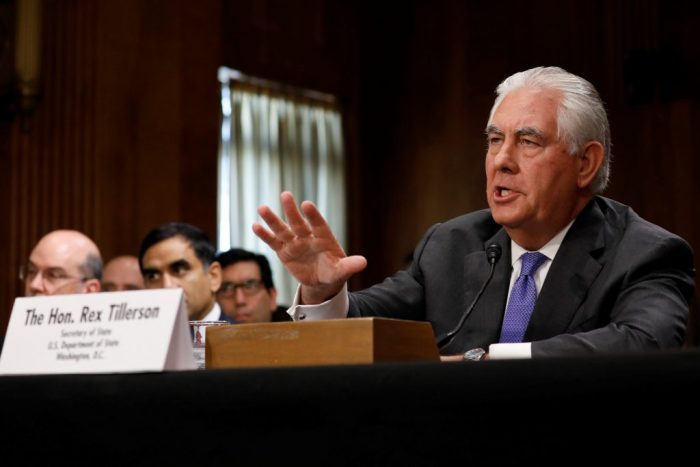
U.S. Secretary of State Rex Tillerson gave testimony to the House and Senate Foreign Affairs Committees this week in detailing the State Department budget priorities for the upcoming year. While the bulk of his testimony concerned the issues such as North Korea and Russian relations, Tillerson made a few comments on Iran that engendered a full-fledged response from the Iran lobby.

While the majority of news media gave ample coverage to Tillerson’s testimony concerning Russia, he was asked a question regarding Iran by Rep. Ted Poe (R-TX), a noted critic of the Iranian regime and the mullahs who control it, that drew scant attention, but clearly worried the Iran lobby.

Tillerson was asked about future plans to enter into negotiations with the Iranian regime and he replied the administration had no immediate plans to do so and expressed support for elements within Iran working towards regime change and a transition to democracy in Iran.

Predictably, the National Iranian American Council, staunch supporters of the Iranian regime, led the charge against Tillerson’s comments; literally breathing fire.

It appears that the concept of promoting democracy in Iran strikes mortal terror in the hearts of Trita Parsi and his fellow travelers at the NIAC.

Darius Namazi at NIAC whipped out a statement condemning Tillerson’s remarks and taking a swipe at Iranian dissident movements, namely the Mujahedin-e-Khalq (MEK), which had supporters in attendance at the hearings to express support for democratic change in Iran.

Poe asked Tillerson whether the U.S. supports “a peaceful regime change” and whether it is U.S. policy “to lead things as they are or set up a peaceful long-term regime change.”

Namazi claimed that Tillerson implied that it was U.S. policy to move toward supporting regime change, stating the U.S. would “work toward support of those elements inside of Iran that would lead to a peaceful transition of those governments.”

Only the NIAC would have a problem with the concept of a “peaceful regime change,” but that is par for the course for the Iran lobby.

The NIAC contends that any effort to force regime change would naturally be tantamount to an open declaration of war on the mullahs in Tehran, which is understandable considering the last time there was a mass effort for regime change following the disputed 2009 presidential elections, protests were brutally put down and innocent Iranians killed in the streets.

Of course, Namazi accuses the MEK of seeking to “violently overthrow the Iranian government,” as part of the Iran lobby’s continuing efforts to denigrate any organized opposition movement to the mullahs’ rule.

Namazi goes on to criticize Tillerson’s statements that the administration had no plans to negotiate with Iran on a range of issues such as the situations in Syria and Yemen, but Tillerson only correctly pointed out that granting Iran a seat at the bargaining table when it is the key agent causing the chaos in the first place was a pointless exercise.

According to Tillerson, “The Iranians are part of the problem…They are not directly at the table because we do not believe they have earned a seat at that table. We would like for the Iranians to end their flow of weapons to the Houthis, in particular their flow of sophisticated missiles to the Houthis. We need for them to stop supplying that, and we are working with others as to how to get their agreement to do that.”

These are not unreasonable sentiments, but apparently for the NIAC they are totally unreasonable.

Not that their efforts mattered since the Senate passed new sanctions on the Iranian regime by near unanimous margins in a further sign that the U.S. is moving past the failed policies of appeasing the Iranian regime under the Obama administration.

The Senate passed the sanctions bill by a 98-2 margin. The bill places new sanctions on Iran over its ballistic missile program and other activities not related to the international nuclear agreement reached with the United States and other world powers.

To become law, the legislation must pass the House of Representatives and be signed by Trump. House aides said they expected the chamber would begin to debate the measure in coming weeks, according to Reuters.

The Iranian regime itself didn’t waste time in attacking Tillerson’s assertions that Iran has “aspirations of hegemony in the region.”

The top U.S. diplomat’s remarks are “interventionist, in gross violation of the compelling rules of international law, unacceptable and strongly condemned,” Foreign Ministry spokesman Bahram Qassemi said in Tehran Thursday.

Qassemi went on to blame a history of U.S. “meddling in Iran in different forms” since the 1950s, saying the policy has only brought about “defeat and global shame” for Washington.

For all the bombastic the Iranian regime and its allies are hurling, the plain truth is that the U.S. is moving quickly and broadly on a number of fronts to rein in Iranian expansionism and militancy.

Congress is seeking new authorities that would enable it to expose and crack down on an Iranian state-controlled commercial airline known for transporting weapons and terrorist fighters to hotspots such as Syria, where Iranian-backed forces have begun launching direct attacks on U.S. forces in the country, according to new legislation obtained by the Washington Free Beacon.

Congressional efforts to expose Iran’s illicit terror networks more forcefully come as U.S. and European air carriers such as Boeing and Airbus move forward with multi-billion dollar deals to provide the Islamic Republic with a fleet of new airplanes, which lawmakers suspect Iran will use to amplify its terror operations.

The new sanction legislation targets Iran’s Mahan Airlines, which operates commercial flights across the globe while transporting militants and weapons to fighters in Syria, Yemen, and other regional hotspots.

A crackdown on Mahan could indicate that Congress is more seriously eyeing ways to thwart Iran’s mainly unchecked terror pipeline in the region.

We breathlessly await the NIAC’s next bout of hyperbole.


Filed Under: Blog, Latest from Lobbies & Appeasers, National Iranian-American Council, News Tagged With: Darius Namazi, Featured, Iran, Iran Human rights, Iran Lobby, Iran Mullahs, Iran sanctions, Iran Terrorism, IRGC, National Iranian American Council, NIAC, NIAC Action, ُTillerson. Ted Poe, Trita Parsi

Iran Lobby Tries to Take Advantage of ISIS Attack to Reset Debate

June 9, 2017 by admin

Iran Lobby Tries to Take Advantage of ISIS Attack to Reset Debate

Iran Lobby Tries to Take Advantage of ISIS Attack to Reset Debate

The attack claimed by ISIS on Iranian targets the other day, including the Parliament building that killed 17 people, would normally be cause for universal condemnation and sympathy for the dead and wounded, but only the Iran lobby can find a way to use tragedy for its own purposes as various groups stepped up the rhetorical assaults against Saudi Arabia and the U.S.

Most notable was the National Iranian American Council which issued a full broadside of press statements, tweets, editorials and media interviews all focused on blaming Saudi Arabia, the U.S. and Iranian dissident groups for the attack.

“ISIS has had very little success striking inside Iran. Main reason is they can’t recruit Iranians easily, so no local knowledge,” said Trita Parsi, president of the NIAC. “Only group with local knowledge that can slip into Iran easily is the Iranian terror group the MEK.”

It is interesting Parsi uses the same language as the Iranian regime in depicting Iranian dissident groups as “terror groups” knowing full well these groups are largely engaged in humanitarian efforts, information and news gathering and exposing the corrupt practices the regime government.

But more interesting is how attempting to reset the debate away from the recent history of Iran’s involvement in the bloody civil war that helped spawn ISIS in the first place, but instead pivot to accusations against Saudi Arabia and foreshadowing military action against the kingdom from Iran.

“Iranians believe there has been a lot of provocation, but they’ve been very restrained so far vis-a-vis Saudi Arabia,” Parsi said to the Washington Times. “Now the nation’s leaders are going to be under a lot of pressure from the Iranian public to respond in some way.”

Parsi said aggressive statements by Saudi leaders have “created a context in which the IRGC can convince the Iranian public not only that the Saudis were connected to Wednesday’s attack, but that the U.S. is also connected,” even if there may not be any evidence for such.

According to Vice News, hours before Wednesday’s attacks, Saudi Foreign Minister Adel al-Jubeir characterized Iran as the leading sponsor of terrorism and called for action to be taken against it over its destabilizing actions in the region, where it is involved in Lebanon and Yemen, as well as Syria and Iraq. In turn, Iran blamed Saudi Arabia for supporting the rise of Sunni extremist groups in the region.

Parsi has laid out the argument justifying military action against Saudi Arabia now that the mullahs in Tehran feel they have justification now to engage in even more provocative action. Whereas supplying the Houthis in Yemen to threaten Saudi Arabia’s border was seen as the extent of Iranian actions, Parsi is now laying the intellectual foundation for an ever-widening war.

A curious position for the NIAC to take since its stated purpose is to help resolve differences among Iranian-Americans.

But there is a broader agenda at play here since legislation is moving through the U.S. Senate now to impose new sanctions on Iran for violations of ballistic missile testing. Parsi and his cohorts in the Iran lobby see new sanctions as an existential threat to the Iranian regime and doing all they can to reset the debate away from Iran and even cull some sympathy from the attacks.

The NIAC is now vigorously attacking the sanctions bill and attempting to leverage the ISIS attack into an argument that passing the legislation would even hamper the fight against ISIS.

A corollary to that argument is the opposition by the NIAC to the designation of the Iranian Revolutionary Guard Corps as a Foreign Terrorist Organization (FTO) by the Trump administration.

The NIAC’s Adam Weinstein authored an opinion piece in Defense One arguing that the IRGC was a key element in the fight to oust ISIS from Mosul, Iraq.

“The success of this offensive is in large part due to the ability of the Iraqi army to act as an intermediary between Iran-backed militias and U.S. troops. However, a Senate bill, the Countering Iran’s Destabilizing Activities Act of 2017, will likely lead the Trump administration to label the IRGC as a terrorist group. Combined with the administration’s increased alignment with Saudi Arabia against Iran, this step threatens to fracture this de facto coalition in Mosul, detract from the fight against ISIS, and recklessly endanger the lives of U.S. forces,” he writes.

It’s a stretch of an argument since IRGC troops are now in the forefront in Syria engaging with U.S.-led forces, even to the point where the U.S. warplanes attacked an Iranian-backed convoy of Shiite militias as it approached U.S. bases.

That hardly sounds like the actions of a U.S. ally determined to fight ISIS.

In fact, the truth is Iran’s play in Syria has always been to target anti-Syrian regime forces and largely leave ISIS forces unscathed. Even after persuading Russia to enter the fray, Iranian officers providing targeting data to Russian warplanes not of ISIS positions, but often anti-regime forces and civilian targets in areas controlled by rebels.

What Weinstein, Parsi and their colleagues fail to recognize is that Iran’s own actions are the determining factor in how the U.S. is going to shape its foreign policy. So long as Iran continues the slaughter in Syria, pushes Saudi Arabia with the Houthi rebellion in Yemen, and broadens tensions with its support for Qatar, as well as increasing turmoil in Bahrain, then the regime is going to reap what it has sown.

Michael Tomlinson


Filed Under: Blog, News Tagged With: Adam Weinstein, Featured, IRGC, Khamenei, National Iranian American Council, NIAC, Trita Parsi

Iran Regime Tries to Blame ISIS Attacks on Opposition

June 8, 2017 by admin

Iran Regime Tries to Blame ISIS Attacks on Opposition

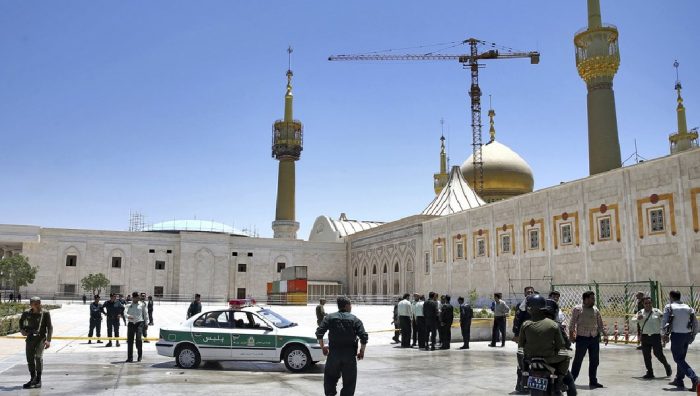
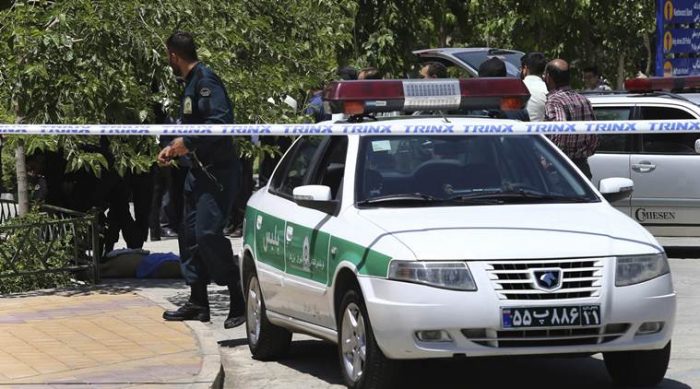
The body of a terrorist, at background left, lies on the ground while police control the scene at the shine of late Iranian revolutionary founder Ayatollah Khomeini, just outside Tehran, Iran, Wednesday, June 7, 2017. Several attackers stormed into Iran’s parliament and a suicide bomber targeted the shrine of Ayatollah Ruhollah Khomeini on Wednesday, killing a security guard and wounding 12 other people in rare twin attacks, with the shooting at the legislature still underway. (AP Photo/Ebrahim Noroozi)

An attack by six assailants armed with rifles and explosives took Iranian regime security forces by surprise the other day in a series of attacks aimed at the heart of the government, including a takeover of the Parliament building and the tomb of the regime’s founder, leaving a dozen dead and 46 wounded that shook the religious theocracy ruling Iran.

The attacks lasted for hours and was claimed by ISIS, which if true, would represent the first successful attack by the terror group on Iranian soil and a significant and somewhat ironic turn of events in the growing sectarian conflict between and extremist Sunni and extremist Shiite ideologies.

Predictably, the default response from Iranian officials was to point the finger of blame at regional rival Saudi Arabia and even Iranian dissident groups such as the Mujahedeen-e Khalq. As Iranian officials struggled in the wake of the attack, one could sense confusion and even a slight note of panic setting in as the prospect of Tehran joining the ranks of cities such as London, Paris and Berlin as prime terror targets began to seep.

For the Iranian regime, much of the blame for the notable rise in Islamic extremist groups lies squarely on its doorstep. The mullahs constant vitriol aimed at Israel, the U.S. and the its Sunni Arab neighbors has only made routine the kind of hate that groups like Hezbollah have acted on for decades.

The use of proxies and terrorist groups has always been a part of the statecraft toolbox for Iran as it has used Hezbollah and the Houthis to conduct open warfare in Syria and Yemen, meanwhile bolstering Shiite militias in Iraq to push Sunnis out of the coalition government there and into the waiting arms of ISIS recruiters.

According to the New York Times, tensions in the Middle East were already high following a visit by President Trump last month, in which he exalted and emboldened Saudi Arabia, Iran’s regional rival. Saudi Arabia and several Sunni allies led a regional effort on Monday to isolate Qatar, the tiny Persian Gulf country that maintains good relations with Iran

In a statement, the Revolutionary Guards Corps said, “The public opinion of the world, especially Iran, recognizes this terrorist attack — which took place a week after a joint meeting of the U.S. president and the head of one of the region’s backward governments, which constantly supports fundamentalist terrorists — as very meaningful,” a reference to Saudi Arabia’s ruling monarchy.

Saudi Arabia swiftly rejected the claim and the Trump White House, while expressing sympathy for the victims, was quick to note that “states that sponsor terrorism risk falling victim to the evil they promote” in a statement.

The MEK also denied any involvement and accused regime officials of a smear attack saying “their intention is to either use this event” against the group or justify their own previous crimes” in a statement.

But that didn’t stop members of the Iran lobby from stepping up to also blame Iranian dissident groups for the attack either directly or indirectly.

Paul R. Pillar, a stalwart for the Iran lobby, wrote in Consortium News blaming the MEK for alleged terrorist attacks in Iran and claiming that prior attacks had left the regime much better prepared to counter terrorism.

We hate to tell Pillar that his measure of “preparedness” by Iranian security forces leaves much to be desired judging by the daylong standoff at the Parliament building.

Pillar even begins laying the ground work for the Iranian regime to step up its terrorist activities in the wake of the attacks saying “in the months ahead, Iran may take actions outside its borders in response to the attacks.”

“Iran may see a need to be more aggressive in places such as Iraq or Syria in the interest of fighting back against ISIS,” Pillar said.

His comments are instructive since the mullahs are likely to use the attacks as an excuse to step up their fights in Syria in to preserve the Assad regime and in Yemen to continue destabilizing the border to Saudi Arabia.

It is not inconceivable that the Iranian regime will use the attacks as a pretext to launch fresh initiatives in places such as Bahrain and Qatar to further split apart the Gulf states and weaken opposition to its regional ambitions to build a Shiite sphere of influence.

Pillar wasn’t alone in trying to drag the MEK into the mud, as Trita Parsi of the National Iranian American Council, gleefully attacked the resistance group in interviews claiming that the MEK was equipped to carry out these attacks because of its channels into the regime and its ties to Saudi Arabia.

“If the goal was to penetrate and destabilize Iran, the MEK clearly was Saudi Arabia’s best bet,” Parsi said. “Still unclear who’s behind the current attack in Iran, but the MEK (and their Saudi backers) are a main suspect. Timing is of course curious. Just last month, A Saudi Crown Prince said Riyadh is working hard to take battle to inside of Iran.”

Parsi and Pillar offered no proof, only suspicions that read like they came from a talking points memo from Ali Khamenei’s office as Iran struggles with the aftermath of the attacks and desperately seeks any scapegoat other than its own support for terrorism.

The roots for these attacks lie squarely in the Iranian regime’s long history of exporting terror as a tool and it has finally come home to bite them.

Michael Tomlinson

Filed Under: Blog, Current Trend, News Tagged With: Featured, hassan rouhani, Iran Attacks, Iran Lobby, Iran Mullahs, Iran Terrorism, IRGC, Khamenei, National Iranian American Council, NIAC, Paul Pillar, Syria, Trita Parsi

Iran Regime Expands Its Militant Activities

June 1, 2017 by admin

Iran Regime Expands Its Militant Activities

Iran Regime Expands Its Militant Activities

With Hassan Rouhani ensconced for another four years, the mullahs in Tehran can turn their attention back to the work at hand which is continuing the expansion of the Iranian regime’s extremism and secure the gains it made during four years of an Obama administration’s failed policy of appeasement.

That expansion is on a variety of fronts. First and foremost, the regime is focused on expanding its military capabilities and has made aggressive moves to do so. It’s a vital step for the regime since the Revolutionary Guard Corps and its related units, such as the Quds Force, are the tip of the spear that also happen to control the economic purse strings of the country.

Through an elaborate network of shell companies, the IRGC control most of the major industrial sectors such as oil, manufacturing, telecommunications and financial services. It regularly uses the profits from these enterprises to pay for its military expenditures as well as the proxies it uses in its fighting.

The IRGC also pushed hard for the nuclear deal for one specific purpose which was to lift crippling economic sanctions that were cutting off its supplies of cash and arms. That was vital since the handwriting was on the wall since the Arab Spring democracy protests and the disputed Iranian presidential election of 2009 that the regime was under significant pressure that threatened the rule of the mullahs.

The flawed nuclear offered unjustified concessions for the regime not only because it lifted sanctions and flooded cash back into the mullahs’ coffers, but also it allowed the regime to unlink its abysmal human rights record and support for terrorism from the agreement itself.

This essentially gave the regime a blank check to continue to engage in militant actions without fear of reprisal.

Part of that military support has been a destructive expansion on Iran’s use of proxies such as the terrorist group Hezbollah to fight its battles, especially in the ever-widening Syrian civil war and the insurgency in Yemen with the Houthi.

News reports have pointed towards a fresh influx of support for Hezbollah and what that may mean for U.S.-backed rebel forces in Syria.

A top U.S. military official says rather than using any additional monies to invest more heavily in conventional forces, there are indications Tehran continues to focus on cultivating special operators to help lead and direct proxy forces, according to Voice of America.

“If anything, increased defense dollars in Iran are likely to go toward increasing that network, looking for ways to expand it,” U.S. Special Operation Forces Vice Commander Lieutenant General Thomas Trask told an audience in Washington late Tuesday.

“We’ve already seen evidence of them taking units and officers out of the conventional side that are working with the IRGC in Syria,” Trask added. “We’re going to stay focused on these proxies and the reach that Iran has well past Syria and Yemen but into Africa, into South America, into Europe as well.”

Yet despite Iran’s heavy involvement in Syria to help prop up the regime of President Bashar al-Assad, U.S. military officials see no indications much of that money has been set aside for bolstering Tehran’s conventional forces.

Nor do they see that as a likely scenario, even though the latest estimates from the U.S. intelligence community warn Iran is trying to develop “a range of new military capabilities,” including ballistic missiles, cruise missiles and armed drones.

Already, Iran is supplementing its own forces inside Syria by providing arms, financing and training for as many as 10,000 Shia militia fighters, including units from Iraq, Afghanistan and Pakistan, according to U.S. intelligence officials.

Military and intelligence officials further worry about the sway Iran has over tens of thousands of additional fighters who are part of Shia militias fighting in Iraq.

Fighting involving U.S. aircraft against Iranian-backed forces in the border town of al Tanf where Syria, Jordan and Iraq meet gave a prelude to what may be a wider war as Iran continues to pour resources into Syria to consolidate gains made by the Assad regime with the backing of Russia.

But conventional warfare isn’t the only area the mullahs want to expand as Steve King, COO and CTO of Netswitch Technology Management, pointed out Tehran’s investment in cyberattacks in Lifezette.

Since 2015, Iran has been conducting a sophisticated online cyberattack campaign that uses custom-built malware to deliberately infect and gain access to sensitive industrial control systems and critical infrastructure in companies across the globe, King writes.

All of this activity during the last two years has been like spring training for the Iranians: mostly practice attacks designed to sharpen their skills, he added.

King noted that according to a 2016 Defense Department report, Iran has evolved its cybersecurity operations to become the primary pillar of its national security strategy and has been testing the limits of sanctions and repercussions associated with the nuclear deal as they might be applied to their activities in cyberspace. So far, no reaction from the West.

Cyberwarfare is now as important to Iran’s military strategy as its ballistic missile program used to be, he warns.

The broad array of threats being presented by the Iranian regime is becoming readily apparent even though the Iran lobby and its supporters continue to work to obscure all of the regime’s actions.

One example is a piece by Cornelius Adebahr in Carnegie Europe that extols the virtues of a Rouhani win and what it means for Europe. It’s a puff piece for the regime and ignores the historical record of Iranian extremism.

Sadly, Adebahr only regurgitates the same false messages offered by groups such as the National Iranian American Council. The brutal reality of Iranian policy can’t be seen in the ballot box but in the battlefields across the Middle East.

Michael Tomlinson

Filed Under: Blog, News Tagged With: Appeasement policy, Cornelius Adebahr, Featured, hassan rouhani, Iran Human rights, Iran Lobby, Iran Mullahs, Iran Terrorism, IRGC, National Iranian American Council, NIAC, NIAC Action

Iran Lobby Turns Attention to Protecting Iranian Regime

May 26, 2017 by admin

Iran Lobby Turns Attention to Protecting Iranian Regime

Iran Lobby Turns Attention to Protecting Iranian Regime

The effort by President Trump to build a new international coalition to confront and contain the Iranian regime got off to a solid start with summits and meetings in Saudi Arabia and Israel. The warm welcome he received from Arab leaders must have unnerved the mullahs in Tehran since the Iran lobby has turned its attention a full-throated defense of the regime.

Trita Parsi of the National Iranian American Council took to authoring an editorial on the NIAC website that attempts to downplay Trump’s efforts.

“A key factor explaining the violence in the Middle East in the past few decades is that the region has lacked a sustainable, indigenous order. The process of establishing an order is by definition disruptive and the Middle East has almost continuously been in this state since the end of the Cold War,” Parsi writes.

“To make matters worse, the temporary equilibriums that briefly provided a resemblance of order were established and sustained by an external power – the United States – rather than by the states of the region themselves. As a result, these temporary periods of stability could only last as long as the external power was willing to sustain the order with its own blood and treasure,” he adds.

Parsi’s logic is perverse since he effectively argues for a process in which Iranian regime institutes order by eradicating everyone else that stands in its path. Of course, Parsi claims that Iran only has the best of intentions for its neighbors, but the track record does not show that as Iran is now embroiled in three wars in Syria, Iraq and Yemen.

Parsi goes on to blame Saudi Arabia for Middle East turmoil all in an effort to isolate Iran, but Parsi never admits to Iranian regime’s own culpability in setting the region ablaze in bloodshed and sectarian violence.

We have seen the profound loss of life after the Obama administration abdicated any role in fixing Syria in favor of the Iranian regime settling issues through barrel bombs and chemical gas attacks.

Parsi’s colleague, Reza Marashi, takes up the cause of whitewashing Iran in his own editorial reiterating the tired old refrain of Hassan Rouhani of being a tried and true moderate, whose real goal is only alleviating the economic malaise gripping Iran.

Unfortunately, no one told Marashi it seems that Iran’s economy will not improve so long as the mullahs continue to siphon billions for their own personal enrichment, as well as ship off more billions to prop up the Assad regime in Syria and pay to support Hezbollah and Houthi rebels in their wars.

Marashi even dubs the newly formed partnership against Iran as an “Axis of Rejection” a nifty piece of word play that reminds us of President George W. Bush’s “Axis of Evil” speech.

“Rouhani’s track record demonstrates that sustained engagement can lower tensions and produce peaceful solutions to conflict,” Marashi writes.

It is a claim that is both surreal and fantasy since Rouhani has presided over a massive escalation in wars that Iranian regime is fighting with no discernible pathway to peace other than to kill off Iran’s enemies.

But the NIAC isn’t through trying to support Iran as Ryan Costello weighed in with a press release lauding tweets made by former Secretary of State John Kerry who negotiated the horrific Iran nuclear agreement in the first place opposing proposed Senate legislation to levy new sanctions on the regime.

“Sec. Kerry’s public intervention cautioning against new Iran sanctions legislation should be another wake-up call that this is the wrong bill at the wrong time. Sec. Kerry would not be turning to the microphones unless the bill was an Iran deal-killer and private efforts to remove poison pills had failed,” Cosello writes.

“Lawmakers must ask themselves why they would give President Trump a mandate to undermine the Iran nuclear deal, ratchet up tensions in the region and undermine Iran’s moderates on the heels of their election victory. Tens of millions of Iranians voted in favor of openness and engagement with the outside world while Trump danced with unelected Saudi monarchs and called for Iran’s isolation,” he adds.

The more appropriate question back to Costello would be “why would lawmakers ever think they could trust the Iranian regime anymore after its commitment to waging proxy wars on its neighbors.”

The NIAC wasn’t the only Iran lobby supporter busy propping up the mullahs. Hooman Majd, a former advisor to Mahmoud Ahmadinejad, offered up the fairy tale that Iran had opted for peaceful co-existence with Rouhani’s re-election in a piece for Foreign Policy.

“Iran’s presidential election also proved the adage that the only thing predictable about Iranian politics is its unpredictability. Which, to the consternation of the Washington foreign-policy class, puts Iran experts on the same professional level as astrologers or palm readers,” Majd writes.

Again, Iranian regime supporters like Majd show their silliness when the election outcome in Iran was far from unpredictable. In fact, no incumbent Iranian president has ever lost re-election, not even Ahmadinejad when his re-election had to be rigged with widespread ballot tampering.

Iranian elections are so predictable, they remind us of the old Soviet Union-style elections with 99 percent voter participation and zero percent uncertainty.

The more the Iran lobby tries to prop up the Iranian regime the more it reveals how weak and vulnerable the mullahs have become.


Filed Under: Blog, News Tagged With: Appeasement policy, Featured, hassan rouhani, Iran Lobby, Iran Mullahs, National Iranian American Council, NIAC, NIAC Action, Reza Marashi, Rouhani, Trita Parsi, Tyler Cullis

As If We Expected a Different Result in Iran Election?

May 22, 2017 by admin

As If We Expected a Different Result in Iran Election?

As If We Expected a Different Result in Iran Election?

Without much drama, Hassan Rouhani was re-elected to a second term as president of the Iranian regime. The result didn’t come as a surprise to any experienced Iran watcher since no incumbent has ever lost a bid for a second term, even if the results had to be faked to get the job done as was the case with Mahmoud Ahmadinejad.

But what has been lost on a large part of the global media is now the mullahs manage to always stage a convenient drama to be played out for them in terms of a fateful showdown between “reformist and moderate” forces against “hardline and conservative” ones bent on rolling back the freedoms of the Iranian people.

If Nazi Germany had staged an election between Adolf Hitler and Joseph Goebbels, the latter probably would have looked like a moderate too.

The same was true here in which a careful choreography ensued. First thousands of candidates filing to be on the ballot had to be summarily tossed aside to clear the field.

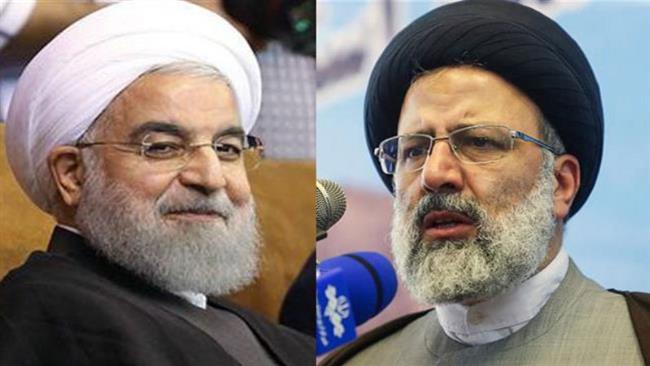
That left only six men to move forward—no women and no active or known dissidents—and then several dropped out to throw their support to one of the two remaining choices: Rouhani and Ebrahim Raisi.

Conveniently, Raisi was portrayed as the “hardline” choice of Ali Khamenei and was portrayed by media as the man who would roll back all the “positive” achievements wrought by Rouhani over the past four years.

Given Raisi’s bloody history as a special prosecutor that oversaw the executions of tens of thousands of Iranian dissidents, it’s easy to see why he might be viewed as slightly more bloodthirsty than Rouhani who oversaw only the execution of mere thousands of dissidents.

It was a Hobson’s choice and a well-played one.

While the Iran lobby focused on Rouhani’s achievements in securing the nuclear deal and opening Iran back up to Western investment, never were there any mentions of the broad human rights crackdowns during his tenure including the largest number of public executions since the 1979 revolution.

In fact, global media were eager to eat up the narrative of a “moderate” win which is exactly what Khamenei and his fellow mullahs wanted to see portrayed.

How easily the world has forgotten the parliamentary elections only last year in which tens of thousands of candidates were knocked off ballots and faithful followers of the mullahs were re-elected.

The Iranian regime smartly chooses to fight its public battles only after the game has been rigged.

Trita Parsi of the National Iranian American Council brayed like a wild animal over the results as the NIAC quickly issued statements lauding the outcome.

“President Rouhani’s convincing win is a sharp rebuke to Iran’s unelected institutions that were a significant brake on progress during Rouhani’s first term. It is also a rebuke of Washington hawks who openly called for either a boycott of the vote or for the hardline candidate Ebrahim Raisi to win in order to hasten a confrontation,” Parsi said.

“In addition to Trump’s America, there are two other countries that will continue to form an Axis of Rejection in response to Rouhani’s foreign policy. One is Saudi Arabia. Despite Tehran’s repeated outreach, Riyadh has refused to respond in kind,” said Parsi’s NIAC colleague Reza Marashi in a piece for Huffington Post.

Fortunately for the rest of the world, many countries are not hearkening to Parsi and Marashi’s messages.

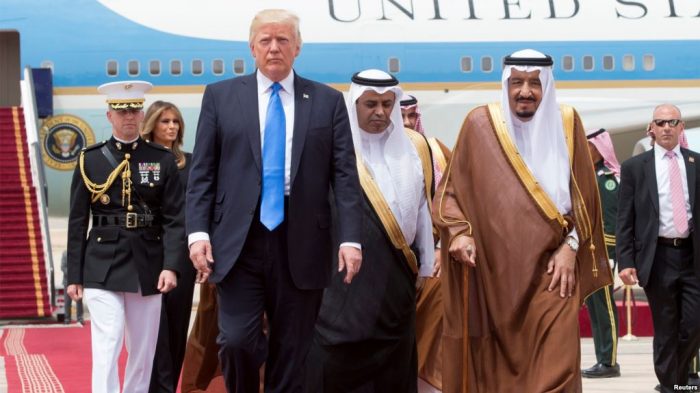
During President Trump’s state visit to Saudi Arabia, he found common ground with the Saudis on the need to confront Iranian regime’s aggression since Rouhani has clearly followed a foreign policy of engaging in wars in Syria, Iraq and Yemen; coupled with a North Korea-like ramp up in ballistic missile testing.

The king said on Sunday Saudi Arabia had not witnessed terrorism until the 1979 Revolution in Iran. Instead of accepting good-faith initiatives, Iran has “pursued expansionary ambitions, and criminal practices and the meddling of other countries’ internal affairs,” he said. The kingdom, however, respects the Iranian people and won’t judge them “by the crimes of their regime,” he said, according to Bloomberg.

Trump later singled out Iran as a terror sponsor. Iran’s leaders speak “openly” of mass murder, Trump said in his keynote speech before dozens of Muslim leaders gathered in the Saudi capital, Riyadh. He said the Iranian government gives terrorists “safe harbor, financial backing, and the social standing needed for recruitment.”

Sen. John McCain lauded President Trump’s trip to Saudi Arabia this weekend saying it sent a strong message to Iran that the U.S. and its allies are ready to block Iran’s efforts to destabilize the region.

“There’s no doubt that if we’re going to impede the Iranian’s continued efforts to exert, certainly, significant strength in the region that this is an important step forward,” the Arizona Republican said on “Fox News Sunday.”

Orde Kittrie, a professor of law at Arizona State University and a senior fellow at the Foundation for Defense of Democracies, lauded the Trump administration’s approach to the Iranian regime and how—in this one area—bipartisan cooperation with Congress seems to be taking root.

“The Trump administration’s different approach is very consistent with that advocated by leading members of Congress including Senate Foreign Relations Committee Chair Bob Corker (R-Tenn.) and Ranking Member Ben Cardin (D-Md.) in their S. 722, and House Committee on Foreign Affairs Chair Ed Royce (R-Calif.) and Ranking Member Elliot Engel (D-N.Y.) in their H.R. 1698,” he writes in the Hill.

“The Trump administration has been accused by some of acting impulsively at times. Its apparently careful, measured and thoughtful approach to Iran policy is encouraging. Tearing up the JCPOA, without a better strategy for preventing an Iranian nuclear bomb and a broader strategy for combating non-nuclear malign Iranian behavior, would make no sense,” he added.

While the world discusses the “moderate” victory in Iran, it would do well to remember how bloody the past four years have been around the Middle East under Rouhani’s term.


Filed Under: Blog, News Tagged With: Featured, hassan rouhani, Iran, Iran Human rights, Iran Lobby, Iran Mullahs, Iran Terrorism, McCain, National Iranian American Council, NIAC, NIAC Action, Trita Parsi, Trump visit to Saudi Arabia

Iran Lobby Sets Up Expectations of Moderate vs Hardliner

May 22, 2017 by admin

Iran Lobby Sets Up Expectations of Moderate vs Hardliner

Iran Lobby Sets Up Expectations of Moderate vs Hardliner

The Iran lobby has been posturing to depict the Iranian presidential election as a battle between “moderates” and “hardliners” as personified by Hassan Rouhani versus Ebrahim Raisi. It has also sought to downplay any role top mullah Ali Khamenei plays in determining the outcome of the election.

The National Iranian American Council has been the most vocal of these groups in pushing this narrative. Examples of this includes pieces appearing in Huffington Post.

The first one by Reza Marashi of the NIAC argues this central conceit of reformists and pragmatists fending off hardline conservatives. The way Marashi describes it, it is almost a heroic struggle. The only thing missing is a dramatic musical score.

Marashi argues that the Iranian people want moderation and reform in their president. Not an unreasonable idea and one that he argues is supported by the election history of Mohammad Khatami and Rouhani, as well as the dismal election effort of Mahmoud Ahmadinejad.

He even portrays Rouhani as a trailblazer in opening political discourse with his election in 2013.

“While it’s true that election season in Iran traditionally allows for an expansion of otherwise taboo political discourse, Rouhani taken it to uncharted waters. First, he publicly committed to engaging in the process of lifting all non-nuclear sanctions if he wins a second term. Then he told a rally that he had not forgotten his 2013 campaign promises, openly stating: ‘Either they have been achieved, or I have been prevented from keeping them.’ And remarkably, he directly told voters: ‘I’ll need votes higher than 51% in order to do certain things,’” Marashi writes.

He goes on to portray Rouhani’s statement as threatening to the regime and a minor miracle he wasn’t hauled off to Evin Prison for daring to utter such statements.

Pardon us while we laugh hysterically at Marashi.

Rouhani has never been, nor ever will be considered a true moderate. He is a loyal member of the regime, pledging allegiance to the same radical theology that all office holders swear to. His past record in military, religious and judicial matters have provided him with bona fides as a harsh punisher of dissent.

His term over the past four years clearly demonstrates his willingness to go to extraordinary lengths to protect the Islamic revolution. During his tenure, the pace of executions rose to the highest level since the revolution, earning annual condemnations from the United Nations, Amnesty International and just about every other human rights organization on the planet.

He has also enforced a broad crackdown on free speech that Iranians access to unmonitored internet access is non-existent. Add to that mass arrests of journalists, the shutdown of blogs and newspapers, and efforts to crack the encryption of social apps such as Telegraph and WhatsApp and you start getting the picture of how bleak things are in Iran right now.

Marashi is correct on one point, which is that this election really is not about the presidency, but rather the positioning going on to succeed Khamenei at the top of the mullah pyramid.

In that regard Marashi and the Iran lobby are getting their cake and eating it too. If Rouhani is elected, they will get to trumpet the victory of moderation even though Rouhani is no moderate.

If Raisi is elected, they can blame it on a newly muscular approach by the Trump administration towards Iran and Middle East policy and never address the horrific crimes of the Iranian regime.

It is a neat solution for the Iran lobby.

Tyler Cullis of the NIAC takes up this issue in his piece in Huffington Post when he questions why Democratic members of Congress seem willing to give the Trump administration leeway in leveling additional sanctions on Iran.

“Democrats have signed up as co-sponsors for Senate and House legislation, believing their political fortunes best lie in supporting aggressive action against Iran rather than acting as a buffer against the Trump administration’s efforts to derail a nuclear accord that, by all accounts, is working as intended,” Cullis writes.

“Democrats are risking a historic mistake – an error in judgment that could end up both alienating their progressive base and costing them hoped-for electoral gains, not to mention setting the stage for a new conflict in the Middle East,” he adds.

Cullis raises the apocalyptic specter of war with Iran as the inevitable path from tightening sanctions against Iran.

It’s the same argument the NIAC has made repeatedly ever since Congress moved to get tougher with Iran as the regime fired off ballistic missiles, sent ships to aggressively confront the U.S. Navy and supported bloody conflicts in Syria, Iraq and Yemen with men, arms and cash.

Cullis proclaims that war with Iran is the sure outcome from any effort to get tougher with Iran. Of course, that assumes that the mullahs only reaction is to go to war with the U.S by this logic.

In fact, the real story is that the mullahs purposely used the nuclear deal to buy time and get out from crushing economic sanctions that were threatening the very existence of the regime.

Now that Iran has received the benefits of billions in cash, foreign investment and the sale of its oil back on the open market, the usefulness and utility of keeping up the pretense of wanting to reach out to the global community is at an end.

Consequently, whether Rouhani or Raisi gets elected is a moot point, since the policies of the regime are not going to change no matter who gets elected. The NIAC has long acknowledged that the office of president in Iran lacks real power, which makes its impassioned arguments for “moderates” to win there even more incomprehensible.

Then again, logic was never a strong suit of the NIAC.

Cullis even makes the outrageous assumption that getting together on Iran will inevitably compel North Korea to take bolder action and not trust the word of the U.S. in any agreement.

“North Korea will view the U.S.’s abrogation of the Iran nuclear accord as clear evidence that the U.S. cannot be trusted to keep to its commitments and will refuse to deal with the Trump administration. In this case, peace will be impossible and war inevitable. Congress’s failings on Iran will spill over and deter peaceful settlement in other areas of conflict such as the Korean peninsula. Democrats will be on the hook once again,”

Really? Are we to assume that a North Korean regime that has broken every agreement it entered into, detonated nuclear devices and openly launches missiles with increasing range is going to be dissuaded by the U.S. commitment to Iran?

The lack of logic from the NIAC never ceases to amaze.

Filed Under: Blog, Current Trend, News Tagged With: Featured, hassan rouhani, Iran, Iran Human rights, Iran Lobby, National Iranian American Council, NIAC, NIAC Action, Reza Marashi, Tyler Cullis

  • « Previous Page
  • 1
  • …
  • 6
  • 7
  • 8
  • 9
  • 10
  • …
  • 26
  • Next Page »

National Iranian-American Council (NIAC)

  • Bogus Memberships
  • Survey
  • Lobbying
  • Iranians for International Cooperation
  • Defamation Lawsuit
  • People’s Mojahedin
  • Trita Parsi Biography
  • Parsi/Namazi Lobbying Plan
  • Parsi Links to Namazi & Iranian Regime
  • Namazi, NIAC Ringleader
  • Collaborating with Iran’s Ambassador

Recent Posts

  • NIAC Trying to Gain Influence On U.S. Congress
  • While Iran Lobby Plays Blame Game Iran Goes Nuclear
  • Iran Lobby Jumps on Detention of Iranian Newscaster
  • Bad News for Iran Swamps Iran Lobby
  • Iran Starts Off Year by Banning Instagram

© Copyright 2026 IranLobby.net · All Rights Reserved.