Iran Lobby

Exposing the Activities of the lobbies and appeasers of the Mullah's Dictatorship ruling Iran

  • Home
  • About
  • Current Trend
  • National Iranian-American Council(NIAC)
    • Bogus Memberships
    • Survey
    • Lobbying
    • Iranians for International Cooperation
    • Defamation Lawsuit
    • People’s Mojahedin
    • Trita Parsi Biography
    • Parsi/Namazi Lobbying Plan
    • Parsi Links to Namazi& Iranian Regime
    • Namazi, NIAC Ringleader
    • Collaborating with Iran’s Ambassador
  • The Appeasers
    • Gary Sick
    • Flynt Leverett & Hillary Mann Leverett
    • Baroness Nicholson
  • Blog
  • Links
  • Media Reports

Is the Open for Business Sign for Iran Now Closed?

July 11, 2017 by admin

Is the Open for Business Sign for Iran Now Closed?

Is the Open for Business Sign for Iran Now Closed?

One of the primary reasons why the Iran lobby was conceived and brought to life was a recognition by the mullahs in Tehran that they lacked all credibility when it came to the Western news media and needed surrogates to help shape the world’s perception of them as more open, accommodating and moderate than they really were.

This was especially important in light of the crippling economic sanctions that were bringing the Iranian regime’s economy to its knees, which was part of the discontent that was on display in the aftermath of the scandalous 2009 presidential election.

The massive street protests came at the height of the Arab Spring protests toppling governments throughout the Middle East and threatened to take down the mullahs in Tehran.

After brutally putting down the protests, the mullahs figured out they needed help to keep their grip on power which led to the election of “moderate” Hassan Rouhani in 2013 and a massive PR push aimed at the Obama administration to craft a nuclear deal that would lift the economic sanctions on Iran.

Much has already been written about the launching of Iran lobby advocates such as the National Iranian American Council and its prominent role in pushing for the nuclear deal by working in coordination with the Obama administration in creating the much-discussed “echo chamber” of supporters.

The aftermath of the nuclear deal and hasty implementation by the outgoing Obama administration created a narrow window of opportunity for the Iranian regime to get what it needed most at that time: cash and lots of it.

The regime was bleeding cash in its support of wars in Syria, Iraq and Yemen so accessing frozen assets, as well as the planeloads of cash paid as part of ransom payments for American hostages, helped stave off imminent collapse.

The next aim for the regime and Iran lobby was the lifting of economic sanctions so that business and investment deals could be struck to provide steady future sources of revenue.

After an initial rush by some European companies, later followed by Russian and Chinese military sales, the proverbial land rush slowed to a crawl amid uncertainty that the Trump administration and U.S. Congress might reinstitute sanctions because of Iranian regime’s support for terrorism and an alarming increase in ballistic missile launches.

It didn’t help the mullahs that their technological partner, North Korea, was busy flinging ballistic missiles into orbit faster than reruns of Real Housewives of Orange County, and alarming most of the nations in the Pacific.

The prospect that the U.S. might levy new sanctions slowed investment to a crawl, aside from a few high-profile sales of commercial jetliners, there has been few business deals announced.

That drought of new investment once again stirred ordinary Iranians to anger in the most recent presidential election a few months ago which saw mass protests throughout Iran; even including harsh demonstrations aimed at Rouhani himself.

The poor condition of the Iranian economy was also a contributing factor to the implosion of the candidacy of Ebrahim Raisi, the handpicked would-be successor by top mullah Ali Khamenei, leading to broad speculation that the mullahs’ grip on power was slipping.

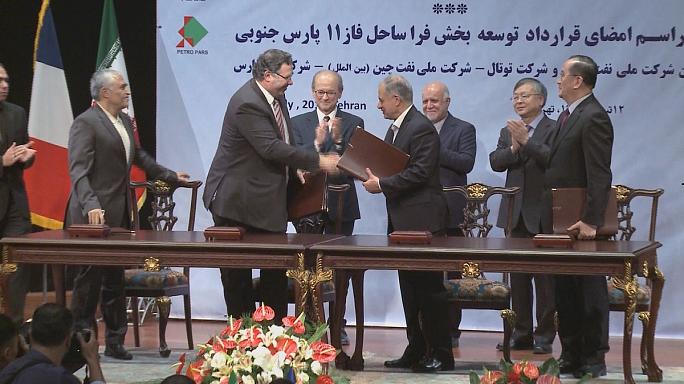
The most recent high-profile deal announced by Iran was with French petroleum giant Total, which agreed to a deal to jointly develop Iran’s massive South Pars gas field. Total was the first, and so far, only major oil player to commit to returning to Iran, while other firms, especially U.S. and British ones remain on the sidelines uncertain of the potential of the re-imposition of economic sanctions.

The risks for Total, and for that matter any other foreign company, doing business with Iran are substantial, as outlined in an insightful editorial by Dr. Majid Rafizadeh, president of the International American Council, in Arab News.

“U.S. pressure and sanctions on Tehran will likely continue to escalate, affecting American and non-American companies. The US may re-impose its sanctions bill that targets non-American companies doing business with Iran. If a company does business with both countries, its investments could be in peril. Quitting Iran’s market would not be easy for those with long-term investments,” Rafizadeh said.

He also alludes to the increasing political instability within Iran, as well as the tightening grip on the Iranian economy by Khamenei and the Revolutionary Guard Corps. That grip exists because of the rising need by the IRGC to funnel even more funds for its foreign adventures which have expanded in various fronts.

Also, as Iranian regime ramps up its ballistic missile program, the United Nations may feel compelled to act and sanction Iran lest it has to deal with both an Iran and North Korea crisscrossing the sky with ballistic missiles.

Recognizing the threat of possibly having its economy shutdown once again, the mullahs are moving rapidly to take advantage of the Total deal to ready an additional 14 oil and gas exploration for tender offers to foreign companies.

Sitting on some of the world’s biggest energy reserves, Iran has already been working on deals to develop fields such as South Pars, South Azadegan, Yadavaran, West Karoun, Mansouri and Abteymour, Reuters reported.

France’s Total last week became the first major to sign a post-sanctions development deal with Iran. Russia’s Lukoil and Denmark’s Maersk are also potential investors.

“Next on the horizon is the search for new oil, with the National Iranian Oil Company planning to tender 14 oil and gas blocks for exploration in the next two to three months,” NIOC’s deputy director for exploration blocks, Rahim Nematollahi, said in Istanbul.

But these deals may become moot should either the U.S. or UN act to impose new sanctions, especially any sanctions once again removing Iran from accessing the international wire transfer network or currency exchanges.

All of which places any foreign entity in a precarious position should it decide to invest in Iran. A company also runs the risk being labelled a supporter of terrorism since the vast majority of revenue Iran generates from one of these deals would inevitably be used to fund its proxy wars and support its terrorist allies.

This may mean that for the short-term at least, the “open for business” sign for Iran may be just another example of fake news.

Laura Carnahan
Filed Under: Blog, Current Trend, News Tagged With: #NuclearDeal, Appeasement policy, Featured, hassan rouhani, Iran, Iran deal, Iran Economy, Iran Lobby, Iran Mullahs, Iran sanctions, Iran Talks, Iran Terrorism, IRGC, Khamenei, National Iranian American Council

Iranian Drones and Missiles Increase Tensions and Risk of US Conflict

June 23, 2017 by admin

Iranian Drones and Missiles Increase Tensions and Risk of US Conflict

Iranian Drones and Missiles Increase Tensions and Risk of US Conflict

The Iranian regime continues to invent innovative ways to destabilize the Middle East. First it relied on supporting terrorist groups such as Hezbollah and proxies such as Shiite militias in Iraq and Houthi rebels in Yemen.

Then it turned to technology to build a nuclear program in secret, then construct ballistic missiles using North Korean designs initially, but then adapted updated designs to increase their range, payload capacity and targeting.

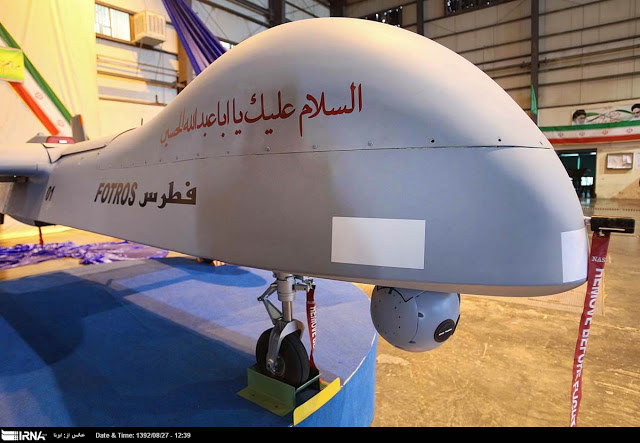
Now the Iranian regime has turned to drones to widen the scope of its military and strike capabilities. In Syria, U.S. forces have already shot down Iranian drones being used in attacks against U.S.-backed forces.

In Pakistan, the Pakistan Air Force shot down an Iranian spy drone in its airspace. The incident is first of its kind in the history of two Islamic countries, which share a porous border.

Wajahat Khan, a journalist and security expert, tweeted: “Confirmed: Iranian spy drone shot down by PAF JF-17 over Panjgur, Balochistan, 45Km inside Pak territory. Unprecedented. New front opening?”

The drone’s downing was reported amid an emergency flag meeting between Pakistani and Iranian officials following the unprovoked firing of several mortar shells into Pakistani territory over the weekend.

On Sunday, Iranian border forces fired several shells near Prom, an area of Panjgur. No casualty was reported though. On May 27, a mortar shell fired from Iranian side in Panjgur district had killed one person. On May 21, at least five mortar shells were fired into Taftan from across the border.

Pakistan has accused Iranians of violating its territorial integrity and lodged protests several times in the last few years.

The increase in incidents ranging from Pakistan to Syria to the Persian Gulf to Yemen paints a disturbing picture of Iranian regime’s aggression on a wide front and threatens to trigger conflicts with and between the U.S., Russia, Saudi Arabia, Turkey, Pakistan and Iraq.

That heightened struggle was highlighted in a piece in USA Today as the Trump administration showed a willingness to confront Iranian regime’s aggression rather than the policies of appeasement by the previous Obama administration.

“The underlying problem is Iranian expansionism,” said James Jeffrey, a former U.S. ambassador to Iraq with extensive experience in the region. The Iranians are worried about who will fill the power vacuum after the defeat of the Islamic State, which is steadily losing territory, he said.

Jeffrey said the Trump administration is now grappling with developing a new strategy that takes into account efforts to blunt Iran’s actions to expand its influence at the same time the U.S. military is focused on defeating the Islamic State, also known as ISIS.

“They believe Iran must be contained, but what they haven’t worked out is the implications of that,” Jeffrey said.

Iranian-backed forces likely will continue to challenge the Syrian Democratic Forces (SDF), an alliance of about 50,000 local troops that the U.S.-led coalition has trained and equipped to combat ISIS.

The Iranians want to hold “an arc of influence” that runs from Iran through Iraq and Syria into Lebanon, said Jack Keane, a retired four-star Army general. “If that ground ends up held by U.S.-backed forces, that interferes with their strategic plans.”

In recent weeks, the United States shot down two Iranian-built armed drones and a Syrian aircraft over Syria. U.S. aircraft have also attacked ground forces around a coalition outpost in southeastern Syria.

Analysts say Iranian mullahs are directly challenging U.S. forces because controlling territory between Iran and Lebanon is critical to their strategic objectives.

That prize of controlling Syrian territory liberated from ISIS is also driving Iranian regime supporters to attack U.S. policy in order to build political pressure on the Trump administration to cave in to Iranian moves.

An editorial in MarketWatch by Faysal Itani, a senior fellow with the Atlantic Council’s Rafik Hariri Center for the Middle East and Ali Marhoon, a policy intern there, warns of the potential for confusion as all of these elements converge and collide and Iran’s willingness to test U.S. resolve in Syria.

“The (Assad) regime itself seems too weak and preoccupied to threaten the U.S.-led coalition in al-Tanf. However, Iran is far more capable, with large reserves of (proxy) manpower and little tolerance for a U.S.-backed de facto statelet in its Syrian client’s territory. It is more likely that Iran, acting through its local proxies, would test the coalition’s resolve through increasing provocations. If so, it would calculate that the United States would back down to avoid serious escalation, thereby curtailing its territorial advances,” they write.

They warn that U.S. policy remains muddled other than eliminating ISIS, which leaves open the potential for the mullahs in Tehran to test the limits of U.S. policy and essentially see what they can get away with.

This testing can be seen in Iraq as forces move to retake Mosul from ISIS, but at the same time Iranian-backed Shiite militias have begun moving into liberated territory to stake their claim to the villages and towns under their banner instead of ISIS.

“It is not clear what the Baghdad government can do about this territorial grab for power in Ba’aj. It has not had the military or security reach to enforce its authority in this region of Nineveh province for many years, and has relied on the goodwill of local tribal forces. It was those forces that were persuaded to take part in former United States president George W. Bush’s famous ‘Awakening’ that defeated the insurgency during the American occupation, but it was also those forces that were eventually betrayed by the sectarian policies of the Nouri Al Maliki government, which led them to acquiesce in (if not actively support) the Daesh takeover in 2014,” writes Francis Matthew in GulfNews.

As Iranian regimes’ drones continue to fly and be shot down, the question inevitably arises as to whether or not the mullahs will back down.

Laura Carnahan

Filed Under: Blog, News Tagged With: #NuclearDeal, Appeasement policy, Featured, Iran Mullahs, Iran sanctions, Iran Terrorism, Khamenei, Sanctions, Syria

Announcement of “De-Escalation Zones” in Syria Just More Hot Air from Iran

May 6, 2017 by admin

Announcement of “De-Escalation Zones” in Syria Just More Hot Air from Iran

Announcement of “De-Escalation Zones” in Syria Just More Hot Air from Iran

Russia, Turkey and the Iranian regime jointly announced the establishment of so-called “de-escalation zones” in Syria in which the Assad regime would allegedly halt military flights over designated areas according to the Washington Post.

As officials from the three countries — Russia, Iran and Turkey — that back rival sides in the conflict signed the agreement at Syria talks in Kazakhstan on Thursday, some members of the Syrian opposition delegation shouted in protest and walked out of the conference room in Astana, the Kazakh capital.

The opposition is protesting Iranian regime’s participation at the conference and role as a guarantor of the agreement, accusing it of fueling the sectarian nature of the conflict that has killed some 400,000 people and displaced half the country’s population.

“Iran is a country that is killing the Syrian people and the killer cannot be the rescuer,” said Abu Osama Golani, a rebel commander who attended the gathering in Astana.

The Iranian regime’s role in the carnage and escalation in Syria makes it a dubious guarantor of safety and security, especially since it was Iran that begged Russia into intervening in the war in a last-ditch effort to save the Assad regime from being toppled by opposition forces.

The Syrian government has said that although it will abide by the agreement, it would continue fighting “terrorism” wherever it exists, code for most armed rebel groups fighting government troops.

It’s the reason why a previous cease-fire agreement signed in Astana on Dec. 30 eventually collapsed. Other attempts at a cease-fire in Syria have all ended in failure largely because of Iran and Syria’s willingness to continue attacking rebel-controlled areas, including those with large civilian populations.

Past efforts at protecting “safe zones” have had a pretty dismal record, largely because combatants are still allowed to engage in attacks without serious repercussions.

“Iran’s activities in Syria have only contributed to the violence, not stopped it, and Iran’s unquestioning support for the Assad regime has perpetuated the misery of ordinary Syrians,” said U.S. State Department spokeswoman Heather Nauert.

The problems in Syria are only one aspect of the larger difficulties of Iranian influence and activities throughout the region and as such requires a more comprehensive solution attacking the instability at its source: Iranian regime itself.

When Iran attempted to launch a cruise missile from a “midget” submarine earlier this week, Pentagon officials saw more evidence of North Korean influence in the Islamic Republic – with intelligence reports saying the submarine was based on a Pyongyang design, the same type that sank a South Korean warship in 2010, according to Fox News.

According to U.S. defense officials, Iran was attempting to launch a Jask-2 cruise missile underwater for the first time, but the launch failed. Nonproliferation experts have long suspected North Korea and Iran are sharing expertise when it comes to their rogue missile programs.

Only two countries in the world deploy the Yono-class submarine – North Korea and Iran. Midget subs operate in shallow waters where they can hide.

“When those midget subs are operating underwater, they are running on battery power—making themselves very quiet and hard to detect,” said a U.S. defense official who declined to be identified.

Perhaps most worrisome for the United States is that Iran attempted this latest missile launch from a midget sub Tuesday in the narrow and crowded Strait of Hormuz, where much of the world’s oil passes each day, Fox News said.

Over a year ago, Iran fired off a number of unguided rockets near the USS Harry Truman aircraft carrier as she passed through the Strait of Hormuz in late December 2015. The U.S. Navy called the incident “highly provocative” at the time and said the American aircraft carrier was only 1,500 yards away from the Iranian rockets.

In July 2016, two days before the anniversary of the nuclear agreement between Iran and world powers, the Islamic Republic attempted to launch a new type of ballistic missile using North Korean technology, according to multiple intelligence officials.

Even with this overwhelming evidence of collusion between the two rogue nations, some Iran lobby apologists continue to make the case of appeasement. In this case, Robert S. Litwak, the vice president for scholars and the director of international security studies at the Woodrow Wilson International Center for Scholars in Washington, D.C., argued that an “Iran-style nuclear deal” with North Korea was a viable solution.

Buying into the false narrative of moderation within the Iranian regime, Litwak argues that making a diplomatic effort to cap North Korea’s nuclear capability—similar to the Iran nuclear deal—is the “least bad” option.

Unfortunately for Litwak, history demonstrates that this least bad option stinks to high heaven and has done nothing to curb Iran’s regional ambitions, thirst for bloodshed or improved its dismal human rights record.

A repeat of the Iran deal for North Korea would no doubt similar disastrous results.

Michael Tomlinson

Filed Under: Blog, News Tagged With: #NuclearDeal, Appeasement policy, Featured, Iran, Iran deal, Iran Human rights, Iran Lobby, Iran Mullahs, Iran sanctions, North Korea, Robert S. Litwak

NIAC Busy Peddling Same Old Lies About Iran Resistance

April 29, 2017 by admin

NIAC Busy Peddling Same Old Lies About Iran Resistance

NIAC Busy Peddling Same Old Lies About Iran Resistance

That old reliable warhorse for the Iranian regime—the National Iranian American Council—served up a tired old, disproven platter of lies about the Iranian resistance movement in an opinion piece published on its website this time by the name Pouya Parsian.

But first it’s important to remember that the NIAC has been a consistent cheerleader and arch-defender of the mullahs in Tehran, especially in the face of withering revelations about its founder, Trita Parsi, and his close ties to Iranian regime officials and its abysmal track record of not criticizing the regime for its abundant human rights violations.

Even though it purports to work on behalf of Iranian-Americans, it barely bothered to issue a press release objecting to the string of Iranian-Americans that have been arrested, imprisoned and tortured by Iran.

During the run up to negotiations for the Iran nuclear deal, the NIAC had consistently urged the removal of any non-core issues such as support for terrorism, human rights abuses and involvement in foreign wars from any deal; thereby removing any and all leverage the rest of the world had over the Iranian regime due to effective sanctions that crippled Iran’s economy.

Now the NIAC has put out a pithy little missive criticizing revelations by the National Council of Resistance of Iran, the largest Iranian resistance group in the world today, that the Iranian regime had taken steps to weaponize its purportedly civilian nuclear program.

Parsian’s piece was rife with errors and fabrications. First off were errors in who was actually revealing these facts. The piece attacked the Mojahedin-e Khalq (MEK) even though the disclosures were being made by the NCRI which is an umbrella group representing a large number of Iranian dissident groups, as well as international human rights and special interest groups such as those advocating for women’s rights and religious and ethnic minorities.

The piece attempts to discredit the NCRI’s findings—not by disputing the truth of the revelations—but instead dredging up old claims of the MEK being listed by the U.S. State Department as a foreign terrorist organization; all of which was proven in error and politically motivated and eventually rescinded by then-Secretary of State Hillary Clinton.

Parsian never disputes past disclosures by the NCRI of Iran’s nuclear program and investigations into the regime’s use of military forces in the Syrian conflict; all proven to be true by independent news sources and national intelligence agencies.

The NIAC is even more inane in criticizing Camp Ashraf, one of two main relocation centers used by Iranian refugees and political dissidents seeking asylum from persecution by the regime, as treating its members inhumanely.

It’s an absurd point when Parsian never mentions the targeting of those same members in Camps Liberty and Ashraf by Iranian and Iraqi security forces resulting in bloody massacres of unarmed men and women and drew universal condemnation by the United Nations, Amnesty International and other human rights groups.

If anything, the NIAC should be thanking countries such as Albania who graciously agreed to resettle these oppressed Iranians and remove them from the threat of murder by Iranian intelligence services.

The irony of the NIAC passionately arguing for Iranians to be allowed to travel to the U.S. over the visa restrictions ordered by the Trump administration and in the same breath trashing these Iranian refugees is not only disingenuous, but fully reveals the NIAC’s bias as a staunch and blind supporter of the Iranian regime’s policies.

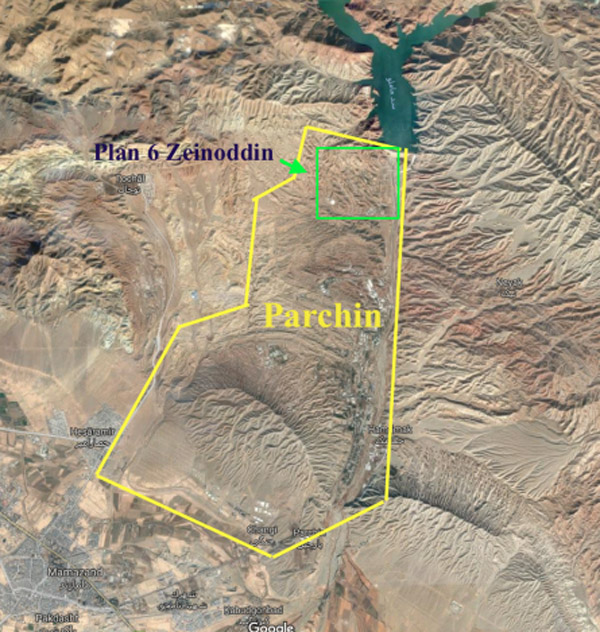
Parsian tries to frame the press conference outlining claims about the regime’s efforts to conduct military applications work at its Parchin nuclear facility as “discredited attempts,” but neglects to mention in any detail Parchin’s central role in Iran’s nuclear program.

Parchin served as a primary facility for Iran’s military to test conventional explosives designed as primary initiators for nuclear warheads. Parsian also fails to mention the regime’s blocking of international inspectors on numerous occasions at Parchin.

Parsian doesn’t mention how the Iranian regime conducted extensive earthmoving and destruction of facilities prior to opening Parchin to international inspection again to remove traces of its prior military nuclear work.

Parsian fails to discuss the fact that international inspectors were prohibited by the regime from collecting its own soil samples and instead had to “observe” hand-picked regime teams and then look at their results, which even then still showed trace amounts of radioactive elements even after sanitizing by the regime.

All of these revelations were confirmed by the International Atomic Energy Agency and other nuclear watchdog groups that were highly critical of the Iranian regime’s handling of Parchin and its inspection.

Of course, Parsian mentions none of these damning pieces of history because the truth would only diminish the NIAC’s attacks on the Iranian dissident movement.

The real question that needs to be asked though is “why?”

Why does the NIAC feel so compelled to attack the NCRI and yet ignore the past history of Parchin?

Why does the NIAC feel the urge to belittle the NCRI, but ignore the proven track record of lying by the Iranian regime?

All of this only reinforces the real truth about the NIAC, which is that it is first and foremost a loyal member of the Iran lobby and will defend the mullahs at all costs without any regard for the truth.

Laura Carnahan

Filed Under: Blog, National Iranian-American Council Tagged With: #NuclearDeal, Featured, Iran deal, Iran Human rights, Iran Lobby, Iran Mullahs, Iran Terrorism, National Iranian American Council, NIAC, NIAC Action, Parchin

Obama Prisoner Release Threatens Iran Nuke Deal

April 27, 2017 by admin

Obama Prisoner Release Threatens Iran Nuke Deal

Obama Prisoner Release Threatens Iran Nuke Deal

Revelations from an investigation by Politico led to damning disclosures of an Obama administration essentially opening up the prison doors to let loose over a dozen individuals subject to years-long investigations for crimes such as smuggling nuclear components and military hardware to the Iranian regime.

Even worse were reports that the Obama administration squashed wide ranging and complicated investigations into entire networks working on behalf of the Iranian regime.

All of this occurring while the administration, in lock step with the Iran lobby, consistently downplayed the prisoner releases as minor and barely reported the ending of the investigative work.

News of the accommodations for the Iranian regime has helped push even more criticism of the nuclear deal and added fuel to the fire to claims that Iran has spent the time since the agreement was put in place to bolster its military, crackdown on dissent at home and refill coffers depleted by wars in Syria and Yemen.

The criticism of the nuclear reached a crescendo this week and discussions on Iran policy in the Trump administration seem to be focused not on how to keep the nuclear deal alive, but rather how to confront and push back the mullahs in Tehran.

Columnist Benny Avni in the New York Post was one of several commentators to note the change in tone and direction with the new administration.

“American pressure on Iran is about to resume,” Avni said.

“It all but disappeared as President Barack Obama and Secretary of State John Kerry gave away one concession after another in the run-up to the completion of the Joint Comprehensive Plan of Action — the Iran nuclear deal — in 2015. Such pressure never really got going again, since Obama wanted Iran’s cooperation in implementing the deal and then flinched at anything the Iranians might use as a pretext to walk away from the agreement,” he added.

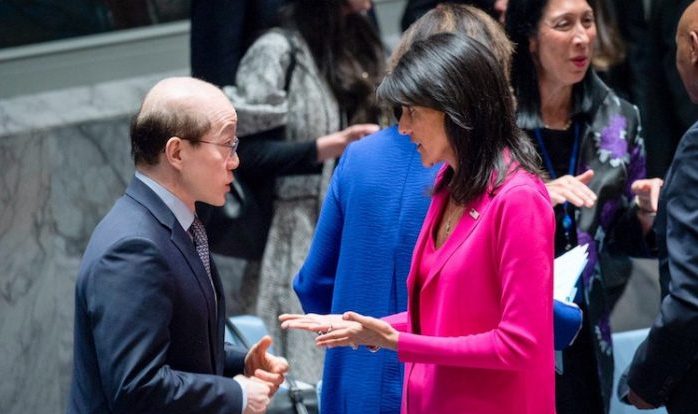
Avni pointed out—correctly—that UN ambassador Nikki Haley reminded representatives of already existing Security Council resolutions banning the regime from trafficking in weapons (which it violated with gusto in arming Hezbollah in Syria and Houthi rebels in Yemen) and halt any ballistic missile development, let alone testing.

“The United States will work closely with our partners to document and address any actions that violate these resolutions,” Haley said. “We must take a stand against Iran and Hezbollah’s illegal and dangerous behavior.”

The proof against the regime also continues to pour in, this time in the form of reporting from the National Council of Resistance of Iran (NCRI), one of the largest Iranian dissident groups in the world, which unveiled intelligence and satellite imagery in recent days that it says is proof of Iranian actions violating the Joint Comprehensive Plan of Action, or JCPOA. It also alleges that the activity is taking place in areas and facilities that are off limits to regular inspections from the International Atomic Energy Agency.
“These are the very same sources that have been proven accurate in the past. The network of the movement inside Iran, the MEK, was responsible for exposing the Natanz uranium enrichment facility and the Arak heavy water facility back in August of 2002,” said Alireza Jafarzadeh, deputy director of the NCRI’s Washington office.

Jafarzadeh said the specific facility shown in the satellite photos depicts a location specializing in detonators. Much of the secret activity is believed to be going on at Iran’s Parchin facility, a spot that Jafarzadeh said Iran blocked inspectors from for years until finally relenting two years ago. He said it makes sense for Iran to do clandestine work there.

“They thought they closed the chapter on Parchin. Now with this new information and new evidence, there is a renewed call among nuclear experts that the IAEA should be able to go back to this place among other locations that the IAEA has never inspected,” said Jafarzadeh.

The disclosures of the potential weaponization of nuclear materials by Iran is hardly a surprise to anyone closely tracking the regime’s past history, but it certainly reinforces the fresh narrative now coursing through Washington, DC and European capitals.

Rep. Lee Zeldin, one of the two Jewish Republicans in the House, is blasting the Obama administration prisoner swap with Iran as “brutally incompetent” following new disclosures about the troubling backgrounds of the Iranians who were set free.

“Once again we are reminded of how brutally incompetent President Obama’s foreign policy was, especially as it related to Iran,” Zeldin told The Post in a statement.

Zeldin has called for more pushback against all of Iran’s threatening activities.

“We must re-establish our leverage with sanctions and other tools that would force the Iranians to the table in the first place,” Zeldin said.

Most of the debate going on now among key analysts and policymakers is the proposal to extend sanctions to the Iranian Revolutionary Guard Corps which sits at the epicenter of the regime’s financial, economic and military infrastructure.

Ilan Berman, senior vice president of the American Foreign Policy Council in Washington, D.C., argued for President Trump to sanction the IRGC in an editorial in US News and World Report.

“If the legal case for designating the IRGC is airtight, the strategic rationale for such a blacklisting is even more compelling.,” Berman said.

“Most immediately, a ban on the IRGC would prevent a further normalization of international trade with Iran. As a result of its 2015 nuclear deal with the West, the Islamic Republic has reaped enormous economic dividends, with transformative effects on its economy and on the strategic aspirations of its leadership. But blacklisting the IRGC could change all that. The Guards, after all, are nothing short of an economic powerhouse, in control of a sprawling empire of companies and corporate entities within the Islamic Republic. All told, the IRGC is believed to command as much as one-third of Iran’s total economy. And because it does, a designation would send a major warning signal to those international firms and foreign nations beginning to dip their toes back into various sectors of the Iranian market that, by doing so, they could run afoul of U.S. counterterrorism laws, with potentially disastrous monetary and political consequences,” he added.

Ironically, Obama’s decision to go easy on the Iranian regime may eventually end up help speed up the demise of his most cherished foreign policy achievement and kill the Iran nuclear deal.

Laura Carnahan

Filed Under: Blog, News Tagged With: #NuclearDeal, Appeasement policy, Featured, hassan rouhani, Iran deal, Iran Human rights, Iran Lobby

Iran Lobby Frantically Tries to Counter Trump Administration Warnings

April 21, 2017 by admin

Iran Lobby Frantically Tries to Counter Trump Administration Warnings

Iran Lobby Frantically Tries to Counter Trump Administration Warnings

Less than 24 hours the Iran lobby was crowing about the Trump administration’s decision to re-certify the Iranian regime in compliance for another 90 days with the nuclear agreement, it went on the offensive as it faced a barrage of explicit statements from high-ranking officials denouncing the Iranian regime including United Nations ambassador Nikki Haley, Defense Secretary James Mattis and Secretary of State Rex Tillerson.

All three, top foreign policy and defense officials made the same statement that the source of trouble in the Middle East today was based in Tehran and that only a policy comprehensively dealing with all aspects of the Iranian regime was going to work moving forward in returning stability to the region.

For the mullahs in Tehran and their Iran lobby supporters, the objective has always been to divide and conquer the issues the rest of the world finds objectionable towards Iran; such as its support for terrorist groups like Hezbollah and dictators like Bashar al-Assad in Syria, as well as a dismal human rights record that would make Joseph Goebbels proud.

Which is why the Iran lobby’s cheering for the 90-day compliance notice had a lifespan of a gnat since it was merely a formality while the administration conducts a national security review of policy towards Iran.

But that didn’t stop the National Iranian American Council from bloviating like a water buffalo in heat.

“It’s a significant contradiction to first come out and say that the Iranians – contrary to all of their claims that Iran would be cheating – actually is living up to the deal only to come out the day after and saying, well, we hate the deal anyways and signaling that the U.S. might actually be walking away from the deal, unless of course the aim is to get rid of the deal without the U.S. having to pay the cost for it, meaning instead of the U.S. violating the deal directly by not renewing these sanctions waivers, killing the deal by escalating tensions in Yemen and elsewhere in the region and hoping that that will force the Iranians out of the deal,” said Trita Parsi, NIAC president on NPR.

Parsi is trying to have it both ways in separating the nuclear from other issues such as human rights or Iran’s meddling in wars raging in Syria and Yemen, but he deliberately skips over the most glaring consequence of the nuclear deal which is because we separated these issues, the mullahs were free to act without fear of reprisal in their ambitions for Syria or in the crushing of dissent at home.

The cold hard truth is that these are all connected issues like the strings of a spider web; the web would never succeed or exist unless all the strands were connected and working together.

The Iranian regime, for lack of a better comparison, is a legal criminal enterprise on a national scale. It concentrates power ruthlessly at the very top, uses the judicial system and religion to enforce disciple and stifle dissent while its military owns just about every industrial activity and skims off the top to line the pockets of the elites.

It’s like the Sopranos on steroids, except Ali Khamenei isn’t seeing a shrink unfortunately.

Of course other members of the Iran lobby weighed in too as Reza Marashi from the NIAC penned a ludicrous piece on TopTopic in which he claimed the European Union was galvanized and united in supporting the Iranian regime.

Unfortunately, yesterday’s terror attack on the Champs-Elysees in Paris only reinforced a growing uncertainty throughout a Europe that has been rattled by Islamic extremists attacks in Berlin, Brussels, Paris and elsewhere.

“While U.S. policy congeals, most European stakeholders remain in wait-and-see mode before making policy decisions – rather than taking steps to shape American policy,” Marashi writes.

We’re sure Marashi wishes for the good old Obama days when the NIAC could pick up the phone and call the White House and find a receptive audience, but it and Europe and finding that shaping policy in the White House now is not about lobbying, but about answering the central question the Obama administration never bothered to ask: “How do we rein in Iranian excesses across the board?”

Parsi reinforced that complete lack of understanding in an editorial in the New York Times in which he cited “a number of potential land mines on the near horizon. The first is in Congress, where a bipartisan effort is underway to introduce new sanctions on Iran that, despite the protestations of the legislation’s sponsors, would violate the terms of the nuclear agreement by adding new conditions onto the deal.”

Once again Parsi ignores the inconvenient truth for the Iran lobby which is that in their mind anything “new” in terms of sanctions levied against the Iranian regime would be considered a violation of the terms of the agreement, even though the agreement was purposely devoid of any clauses or mention of issues such as human rights.

Their twisted pretzel logic has them boxed in where now they are forced to denounce any and all efforts to sanction Iran as a threat to the regime. If Iranian warplanes dropped sarin gas on Sunni refugees in Iraq, Parsi and his colleagues would undoubtedly argue against any sanctions as a violation of the agreement; a convenient catch-all.

It’s also hilarious Parsi raises the prospect of a “moderate” Hassan Rouhani being defeated at the ballot box in next month’s elections since he ignores Iran’s long history of rigging every election. In fact, the regime’s Guardian Council only yesterday tossed former president Mahmoud Ahmadinejad off the ballot after much fanfare of him registering as a candidate.

In Iran, you don’t get on the ballot unless you are expected to get the blessing of the mullahs.

The most absurd comment Parsi makes is the assertion that if the U.S. reneges on the deal, Iran will undoubtedly move forward with its nuclear ambitions.

We hate to break it to the regime lackey, but the deal—by Parsi’s own admission—was never designed to halt Iranian nuclear work, only slow it down by a decade before the much ballyhooed “breakout period,” but even that has been whittled down by most analysts to just a few years.

All of which makes the statement issued by the NIAC in response to Secretary Tillerson’s remarks the other day even more laughable.

“There is little room to interpret this statement as anything less than a proclamation of the Trump administration’s intent to scrap the nuclear deal and reset the United States on a path to war,” said the NIAC.

Have they not been paying attention to Syria, Iraq, Yemen or Bahrain lately?

Michael Tomlinson

Filed Under: Blog, Current Trend, National Iranian-American Council, News Tagged With: #NuclearDeal, Appeasement policy, Featured, Iran, Iran deal, Iran Human rights, Iran Lobby, Iran Mullahs, Iran sanctions, National Iranian American Council, NIAC, NIAC Action, Reza Marashi, Syria, Trita Parsi, Yemen

Trump Administration Must Move to Sanction IRGC

April 18, 2017 by admin

Trump Administration Must Move to Sanction IRGC

Trump Administration Must Move to Sanction IRGC

With recent moves such as the launching of a cruise missile attack against a Syrian airfield, the dynamics of the how to confront the Iranian regime are inevitably changing in the transition from the Obama administration to the Trump administration.

The pressure on the Iranian regime can be seen in the stepped-up attacks by the Iran lobby to try and dissuade U.S. policymakers from shifting to a more aggressive stance against the mullahs in Tehran.

How and in what form that stance will be is taking shape internally within the administration and in the halls of Congress and the mullahs are desperate to influence that debate. Unfortunately the easy access Iran enjoyed through the open door policy at the Obama White House through multiple visits by Trita Parsi of the National Iranian American Council and other members of the Iran lobby is now shut off.

The Trump White House is poised to ratchet up existing sanctions against Iran and is weighing a much stricter interpretation of the nuclear agreement between Tehran and major world powers, according to Foreign Policy.

The administration is inclined to adopt a “more rigorous application of the tools at its disposal,” a senior White House official told Foreign Policy, referring to sanctions policy. Among the options under consideration: broadening U.S. sanctions to include much larger chunks of the Iranian economy linked to the Islamic Revolutionary Guard Corps (IRGC).

No final decision has been taken by the president or the cabinet. But officials said some decisions will need to be taken soon. On April 25, Iran and the six governments that negotiated the nuclear deal with Tehran, including the United States, are due to meet in Vienna for a quarterly review of the accord.

How President Donald Trump decides to proceed on sanctions and the nuclear deal more broadly carries high stakes for the United States, Iran, and the wider Middle East. A concerted U.S. effort to squeeze Iran would represent a gamble that Tehran’s regional push for power, particularly in Syria and Yemen, could be checked in part by increasing economic pressure.

Another major decision facing President Trump is whether or not to stick with the nuclear deal that he so roundly criticized on the campaign trail. The calculation of whether or not to keep it will have to rely on a central question which is are the mullahs abiding by it or simply using it as a smokescreen to rebuild their military as many suspect.

But the president doesn’t have to shred the deal to put pressure on the Iranian regime. As Foreign Policy pointed out, the agreement is not a binding treaty as such he has broad leeway to interpret its provisions. Under President Obama, that flexibility allowed him to grant Iran broad leniency in areas such as enriched fuel and heavy water. Trump could choose to close those loopholes.

Evidence of that tougher stance has cropped up as the Treasury Department announced new sanctions last week, including the brother of the powerful head of the special forces arm of the IRGC, Sohrab Soleimani, for his role in abuses at the country’s prisons. And in February, the Treasury Department blacklisted eight organizations linked to the Revolutionary Guards, as well as one of its officials based in Lebanon.

The focus on the IRGC and its Quds Forces signal a significant change that could hold the promise of increased effectiveness because of the deep roots the organizations have throughout Iran and its economy.

At the moment, any entity that has a 50 percent ownership stake or more held by the IRGC is subject to sanctions, but the administration is mulling a change that would drop the threshold to a lower percentage.

Such a move would break with long-standing policy at Treasury, which has traditionally defined ownership as above 50 percent for any category of sanctions. A lower threshold would mean blacklisting hundreds and possibly thousands of additional Iranian companies and organizations with links to the IRGC, experts said.

The mere threat of a lower threshold has helped stifle potential investments into the Iranian regime as banks and companies from Europe and Asia fret about possible sanctions being levied by the U.S. down the road should they invest.

That has had a ripple effect as the much-promised economic benefits from the nuclear deal have failed to materialize leading to speculation that top mullah Ali Khamenei may have decided to abandon the pretense of moderation in favor of a harder line as evidenced by who makes the presidential ballot for next month’s election in Iran.

Emanuele Ottolenghi, Ph.D., a senior fellow and expert on Iran at the Foundation for Defense of Democracies, wrote in The Hill of the need to close one loophole benefitting the regime now which the lifting of sanctions restricting the sale of commercial airliners to Iran.

The activities of Iran’s aviation sector have exposed the inadequacy of the nuclear agreement’s caveat that licensed items and services must be used “exclusively for commercial passenger aviation.” Currently, at least five Iranian and two Syrian commercial airlines are engaged in regular military airlifts to Syria, he writes.

These carriers have been crisscrossing Iraqi airspace since 2011, but have increased their tempo since the summer of 2015, when Iran and Russia coordinated their efforts to save Assad’s regime. Flight tracking data indicate that, from the nuclear deal’s implementation day on Jan. 16, 2016 to March 30, 2017, there were at least 696 flights from Iran to Syria, only six of which were carried out by Iran’s air force, she added.

She points out that it is extremely likely that Iran Air is still an active participant in the Syria airlifts. First, there is no justification for frequent commercial flights to Damascus: Syria is a war zone with little tourism or commerce, yet it is served almost twice daily by Iranian airlines. Iran Air, for example, flies to Damascus twice a week. It is doubtful Iranian tourists are posing for selfies in the ruins of bombed cities.

The flight cannot be purchased on Iran Air’s booking website or through travel agencies and the booking website does not include Damascus among its destinations from Tehran’s international airport, where the flights originate. Finally, Iran Air flights to Damascus occasionally make unscheduled stopovers in Abadan, an IRGC logistical hub for the Syria airlifts.

The next few months will show whether or not the Trump administration will follow through on its campaign promises and finally begin the hard work of stopping the mullahs.

Michael Tomlinson

Filed Under: Blog, News Tagged With: #NuclearDeal, Featured, hassan rouhani, Iran deal, Iran Mullahs, Iran sanctions, Iran Terrorism, IRGC, Khamenei

Iran Lobby Covers for Chemical Attacks on Innocents in Syria

April 14, 2017 by admin

Iran Lobby Covers for Chemical Attacks on Innocents in Syria

Iran Lobby Covers for Chemical Attacks on Innocents in Syria

True to form, the Iran lobby—in this case the National Iranian American Council—dutifully stepped up to the plate to defend the Assad regime’s continued existence by bashing the Trump administration decision to attack a Syrian regime airbase that flew the strikes.

Trita Parsi, the NIAC’s founder and president, offered up some gems of disingenuousness in Huffington Post claiming that the decision to finally cross the red line that President Obama balked at would have serious consequences.

“By now, it is clear that the missile strike has not impeded Assad from using his air force to strike rebel strongholds. In fact, Syrian warplanes reportedly carried out strikes yesterday against rebels near the city of Homs — taking off from the very air base hit by U.S. missiles. Trump even gave Assad advanced notice via Russian President Vladimir Putin, which enabled the Syrian dictator to move his troops and bunker his planes. Moreover, Trump left one of the airstrips at the targeted base untouched, which is why Assad could quickly use the base to launch further attacks,” Parsi said.

To be blunt, that’s a pretty stupid observation, even for someone claiming to be as learned as Parsi.

President Trump’s decision to strike was not a military one, but a strategic political one. In the old parlance of diplomacy, the Syrian chemical attack was a “Casus Belli;” an act so egregious and reprehensible to the sensibilities of international community and American values that the U.S. had no choice but to act.

In the history of U.S. diplomacy, this kind of retaliation is a no-brainer until President Obama decided he wanted to test out his quaint theory of appeasement in modern diplomacy; much to the shame of human rights history as over 500,000 people have lost their lives now and over four million have flooded out as refugees.

Parsi is quick to point out the lack of military effectiveness of the strikes since he skips over the most obvious benefit, which is to put Bashar al-Assad, and his allies on notice that the U.S. is perfectly willing and able to blow the Syrian military back into the Stone Age and outside interference would be grounds to include their forces in the fracas.

In one fell swoop, President Trump has neatly turned the tables on the Syria-Allies axis and forced them to calculate their own response without setting off another violent U.S. response.

Referring to consequent assault on the rebel’s strong hold and the civilians living in those areas, Parsi concludes: “The end result will be a more intensified civil war with more civilian casualties and even greater difficulty for diplomatic efforts to bear fruit,”.

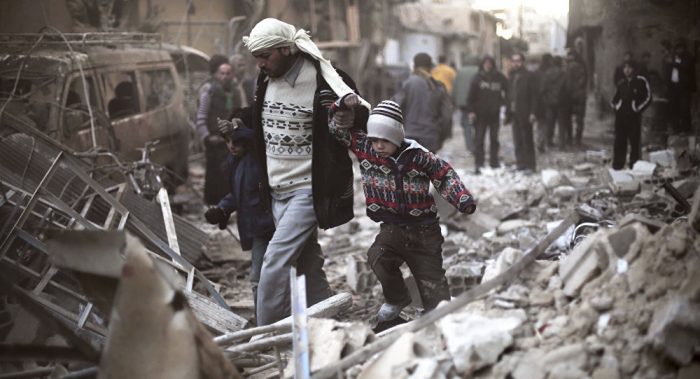
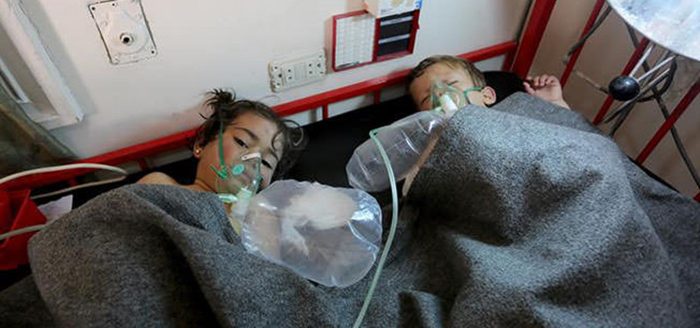
For the people of Syria, no one will claim that the Syria and Iranian bombardments, assaults and revenge killings against Sunni Muslims can “intensify” as Parsi claims. How do you step up from massive aerial bombardments and the pervasive use of sarin and chlorine gas attacks?

About the only thing the Iranians have not tried against Syrian rebels is using biological agents and we don’t put it past Tehran to go that far as the mullahs have already decided to militarize hospitals and health clinics in this fight by targeting them specifically for attack.

The key to solving the Syrian crisis has always been pushing out foreign elements and leaving the Syrian people to resolve their own dilemma and achieve a political solution. If Iran had not intervened in the first few months of the popular revolt against Assad’s rule, we would find ourselves in a very different situation.

But the fact that Iran has poured billions in cash, sent thousands of soldiers and terrorist fighters, along with planeloads of advanced weapons to keep Assad in power has been the principle reason why Syria is such a mess in the first place; a fact that Parsi never admits to.

“Helping ensure that children and civilians aren’t trapped in Syria should be the first and most obvious thing the U.S. can do to help,” Parsi said in what has to be one of his all-time inane comments.

Trying to find a way to export more Syrian refugees while allowing Syria to descend into more chaos is the recipe the mullahs in Tehran have followed and Parsi has preached. It has not been a recipe for success for the Syrian people though.

Of course, no Parsi editorial would be complete without a defense of the idiotic Iran nuclear deal.

With the revelation that the accord on Syrian chemical weapons turned out to be a complete falsehood, the obvious question everyone is asking—and Parsi never answers—is how can you expect the Iran nuclear deal to be working if the same people are guaranteeing it as guaranteed the Syrian chemical weapons deal?

David French in the National Review asks the same important question as he takes up Glenn Kessler’s fact-checking piece in the Washington Post which gave former National Security Advisor a whopping four Pinocchios for her assertion that the chemical weapons deal worked.

“Media accountability is worthwhile, but we don’t need fact-checkers to tell us that the Obama administration’s Syria policy was a miserable failure. We saw the evidence in the bodies of the children slain by sarin gas. However, we do need to remember the sorry recent track record for WMD deals with hostile countries… The Obama administration was supposed to have stripped Syria of chemical weapons. Syria gassed its citizens,” French writes.

“Vicious liars like the North Koreans, Syrians, and Iranians tend to be vicious liars no matter the documents they sign. That’s a truth worth remembering as another WMD deal collapses and further destabilizes and already-dangerous world,” he adds.

French is correct and Parsi is dead wrong—which isn’t a first for him.

Michael Tomlinson

Filed Under: Blog, News Tagged With: #NuclearDeal, Appeasement policy, Featured, Iran deal, Iran Lobby, NIAC, NIAC Action, Rouhani, Sanctions, Trita Parsi

Bipartisan Consensus Forming on Dealing with Iran Regime

March 30, 2017 by admin

Bipartisan Consensus Forming on Dealing with Iran Regime

Bipartisan Consensus Forming on Dealing with Iran Regime

In today’s turbulent political environment there is not much anyone agrees on, except that maybe the New England Patriot comeback in the Super Bowl was astounding or that the Chicago Cubs win of the World Series was historic.

Other than that, most politicians can’t even seem to agree on the weather and what causes a shift in temperature day to day.

On one topic though there seems to be a growing bipartisan consensus, not just in the U.S. but around the world and that is more needs to be done to rein in the intransigence of the Iranian regime and the threat posed by its burgeoning military and ballistic missile program.

Monday’s Senate Foreign Relations Committee hearing on Iran was an example of a political environment with a rare and welcomed unanimity. Ranking member Sen. Benjamin L. Cardin (D-Md.) remarked that although he voted against the Joint Comprehensive Plan of Action on Iran, he doesn’t think it would be wise to withdraw, saying:

“Iran’s activities today are as bad as they have ever been and probably worse. They are certainly increasing their terrorist sponsorship in the Middle East as we see in so many different countries in that region. Their record on violating the ballistic missile obligations are well known and well understood. Their human rights violations against their own citizens are horrible, one of the worst countries in the world. They violate the arms embargo and the list goes on and on. So, it is appropriate to get this Committee to look at what we can do to make sure that first, the Iran nuclear agreement is honored so that Iran does not become a nuclear weapons state, but then secondly, look at those activities that were not covered under the JCPOA as to how we can play a stronger role.”

He was joined by his Republican colleague, Sen. Bob Corker (R-Tenn.), chairman of the committee who said:

“One of my criticisms of the JCPOA was that it would become our de facto Middle East policy and Iran would expand their destabilizing activities. I think we are seeing a lot of that today. Regionally, we’ve seen an escalation in Iranian intervention. Iran, along with its allies in Russia, has continued to prop up Assad at the cost of countless lives in Syria. Iran’s support to the Shia militias in Iraq threatens the interests of Sunnis and Kurds alike, not to mention the Shia in Iraq that don’t subscribe to the anti-American, zero-sum politics of the militias that are there.”

Jennifer Rubin in the Washington Post’s Right Turn blog opined that “given this shared assessment of Iran — the JCPOA is not going away but the United States needs to confront Iran in other arenas — it’s not surprising that a bipartisan bill, the Countering Iran’s Destabilizing Activities Act of 2017, with seven co-sponsors from each party, was introduced last week.”

“The act establishes new sanctions targeting Iran’s testing of ballistic missiles and its backing for terrorism, and also seeks to block the property of any entity involved in the sale of arms to or from Iran. It does not reintroduce sanctions lifted from Iran as part of the 2015 nuclear deal.”) In a summary released last week, senators described potentially far-reaching measures including mandatory sanctions on those involved with Iran’s ballistic missile program, new sanctions against the Islamic Revolutionary Guard Corps and a requirement for the president “to block the property of any person or entity involved in specific activities related to the supply, sale, or transfer of prohibited arms and related material to or from Iran,” Rubin added.

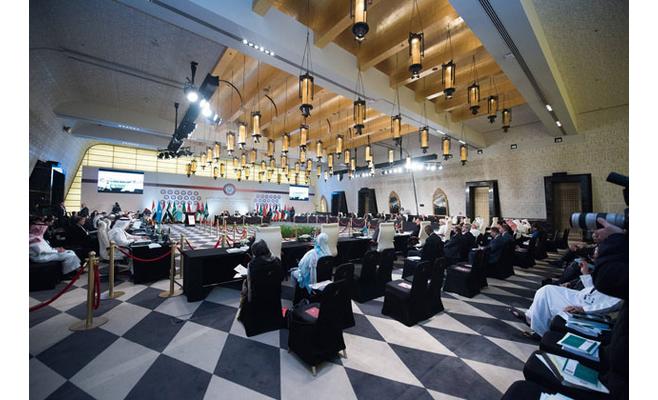
But it wasn’t just on Capitol Hill where there was unanimous consent as all 15 resolutions passed by the Arab summit which took place in Jordan Wednesday were devoted to an indictment of Iran, its Revolutionary Guards Corps and Lebanese surrogate, Hezbollah. They were a testament to the depth of Arab-Iranian animosity and exposed the extent of the rift between the Sunni and Shiite Muslim worlds.

Iran was accused of meddling in the internal affairs of Arab nations, inciting Shiites against Sunnis, and arming and training Shiite terrorist groups for operations against legitimate Arab governments. The Arab rulers combined to put Tehran in the dock for its interference in the Syrian civil war and assault on its sovereignty.

It was notable that at an Arab summit that has in the past concerned itself with issues related to Israel and the plight of the Palestinian people, the entire focus of the summit was on the Iranian regime; demonstrating how important the issue of confronting Tehran has become to the wider Arab world.

In the annual AIPAC conference a clearer united vision of the importance to oppose the Iranian regime was surfaced. American authorities and law makers used the opportunity to show their unanimous visions on the threat they feel from the Iranian regime and the need to take action to contain the growing destabilizing activities of the mullahs in the region.

The speaker of the US House of Representatives, Paul Ryan, called to designate the Revolutionary Guards as a terrorist group, describing it as a “terrorist army.” He said “Iran supports the terrorist dictator of Damascus and the militias in Yemen, Baghdad and Beirut.”

Furthermore, Nikki Hailey, the US ambassador to the United Nations asserted at the conference that “Iran’s nuclear deal is worrisome because it empowered Russian and Iran and encouraged the latter to act freely without fear of accountability.”

Mitch McConnell, the Republican majority leader in the Senate added: “Today we must adopt a different approach. We must combat Iran’s ability to finance, arm and train terrorists, such as Hezbollah, Hamas and its proxies in Syria.”

McConnell criticized Iranian regime’s nuclear deal, saying that it disabled the United States from taking more aggressive steps against Iran.

Meanwhile the Iran lobby was once again beating the war drum in an editorial in Huffington Post by Jamal Abdi of NIAC Action and Adam Weinstein of the National Iranian American Council, in which they claimed that this bipartisan consensus would only provide incentives for the U.S. to be plunged into a war with Iran at the behest of President Trump.

They go on to argue that if the proposed sanctions bill passes, Tehran would respond negatively and all the positive gains made by the nuclear deal would evaporate. What positive gains?

Since the deal was agreed to, the Iranian regime has broken every promise of moderation, stability, peace and partnership made by the NIAC and other Iran lobby supporters.

The harsh proof of Iranian regime’s track record over the past years has been so convincing that a bipartisan consensus is seen among both houses of congress to try to oppose the mullahs in Tehran.

All we can say is that it’s about time.

Michael Tomlinson

Filed Under: Blog, News Tagged With: #NuclearDeal, Adam Weinstein, Featured, Iran deal, Iran Lobby, Iran Mullahs, Iran sanctions, Iran Terrorism, IRGC, Jamal Abdi, National Iranian American Council, NIAC, NIAC Action, Syria, Yemen

There is No Battle Between Moderates and Hardliners in Iran

March 21, 2017 by admin

There is No Battle Between Moderates and Hardliners in Iran

There is No Battle Between Moderates and Hardliners in Iran

One of the cornerstones of the Iran lobby’s messaging has been the contention that a monumental battle is being waged in Iran between moderate elements in the Iranian regime and hardline conservatives intent on winning at all costs.

To the extent hardliners want to hang onto their power that part of the story is correct, but the image of moderates existing and having a meaningful role within the regime government is as illusory as a mirage of a desert oasis to a thirsty wanderer.

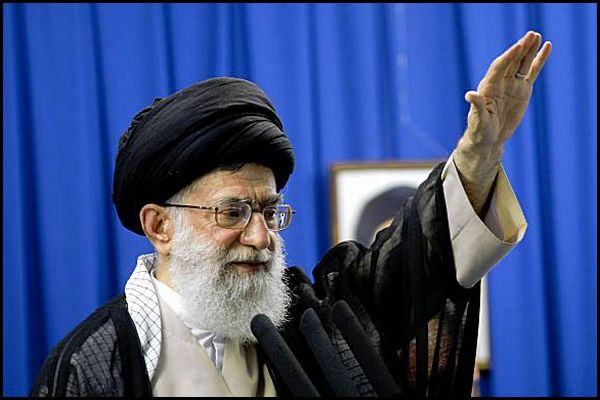
The regime’s leadership, under the hard rule of Ali Khamenei, has done a methodical job of eliminating any shred of moderate opposition. Ever since the original Islamic revolution was taken over by the religious clerics that now run Tehran, the regime has systematically arrested, imprisoned, tortured and executed anyone publicly voicing a dissenting point of view.

This has even extended to targeting and attack Iranian dissidents outside of Iran; the most notably example are members of the People’s Mujahedin Organization of Iran, one of the largest and oldest resistance groups to the mullahs. Many of these PMOI members had resided in refugee camps in Iraq that were constantly under attack by Iranian operatives, as well as local Shiite militias acting on Iranian control.

The most egregious example of Iran’s crushing of dissent was on display in the wake of the 2009 presidential elections in which mass demonstrations by ordinary Iranians was met with bullets and mass arrests that led to a near daily parade to the gallows.

Before each election cycle since, the regime has instituted broad crackdowns to remove any dissenting views. This has included mass arrests of journalists, bloggers, politicians, activists and even students and artists.

The regime’s highest policy making bodies have also ensured that only carefully vetted and approved candidates were on the ballot for presidential and parliamentary elections which is why Hassan Rouhani was elected before and may be re-elected this May and Iran’s parliament remains firmly in the control of the ruling mullahs.

Dr. Majid Rafizadeh, president of the International American Council and a leading expert on Iran and U.S. foreign policy, wrote about this Iran lobby myth in Arab News.

The truth is that Iran’s moderates are a critical part of the political establishment. Many of them, including the current President Hassan Rouhani, were robust supporters or founding fathers of the Islamic Republic’s Shiite theocracy. These “moderates,” such as the late former President Akbar Hashemi Rafsanjani, were once called “hard-liners,” Rafizadeh writes.

“In addition, it is crucial to point out that to be a politician in Iran, your loyalty to the core pillars of the political establishment should be firmly proven. Vilayat-e Faqih is the core pillar of Shiite political thought expounded by the late Ayatollah Ruhollah Khomeini, and forces a guardianship-based political system on the people, and requires that a Shiite religious figure be the leader of the nation,” he adds.

The terms “moderates” and “hardliners” are also a Western invention and not used in Iranian politics according to Rafizadeh. Consequently, the Iranian regime makes no distinction in political allegiances. You are either a loyal member of the regime or you are not. If you are not, your ticket is punched for a trip to Evin Prison.

The Iran lobby uses these terms with Western media in order to create the appearance of fissures in Iran’s political system where there is none.

“Iran’s supreme leader and the senior cadre of IRGC hold the final say when it comes to Iran’s foreign policy. They also have significant control over Iran’s economic, financial, and political sectors. For example, at the end of the presidential term of the so-called ‘moderate’ Hassan Rouhani, Iran has not altered its policies toward Syria, in supporting President Bashar Assad, along with Iraq, Lebanon, Yemen and other nations’ domestic affairs. In fact, it has intensified its expansionist policies through its military and additional revenues,” Rafizadeh said.

Since 1979 Iran has not altered the cornerstone of its foreign policy and revolutionary principles regardless of who was president and therein lays the harshest rebuttal to the Iran lobby. If Iran was indeed going to moderate its behavior as a result of the nuclear deal as the National Iranian American Council insisted on, then where has the emptying of Iran’s prisons begun of political prisoners?

Ultimately the price being paid by Iran’s religious and ethnic minorities such as Kurds, Christians, Sunni, Arabs and others demonstrate exactly how little has changed in Iran since 1979.

Not surprisingly, there has been a marked increase in human rights abuses including the ghastly use of acid in attacks against women.

After almost a year of calm, spraying people with burning acid has returned in Iran where a family of four has been attacked on Saturday in Sharada, within Isfahan province, Iran’s top tourist destination, according to Al-Arabiya.

Last month, unidentified people also attacked two women in Maashour, within the Ahwaz province, according to Iranian news agencies.

Isfahan’s Investigative Police Chief Sitar Khasraoui said in press statement that the families were taken to the hospital to treat the burns. The family consists of the father, 53, the mother, 48, the son, 23, and the daughter, 20. Both parents are said to be in critical condition.

In 2014, attacks in Isfahan shocked the public and provoked a major protest there from citizens who demanded better security and action over such violent crimes.

Reports on social networks have claimed that the victims were doused on the face and body because they were not properly veiled. They were targeted by assailants on motorcycles.

The next time the Iran lobby professes that moderates are battling for control in Iran, one might ask if that battle is being done from the back of a motorcycle.

Laura Carnahan


Filed Under: Blog, Current Trend, News Tagged With: #NuclearDeal, Featured, hardliners, hassan rouhani, Iran Mullahs, IRGC, Moderate Mullahs

  • « Previous Page
  • 1
  • 2
  • 3
  • 4
  • 5
  • 6
  • …
  • 15
  • Next Page »

National Iranian-American Council (NIAC)

  • Bogus Memberships
  • Survey
  • Lobbying
  • Iranians for International Cooperation
  • Defamation Lawsuit
  • People’s Mojahedin
  • Trita Parsi Biography
  • Parsi/Namazi Lobbying Plan
  • Parsi Links to Namazi & Iranian Regime
  • Namazi, NIAC Ringleader
  • Collaborating with Iran’s Ambassador

Recent Posts

  • NIAC Trying to Gain Influence On U.S. Congress
  • While Iran Lobby Plays Blame Game Iran Goes Nuclear
  • Iran Lobby Jumps on Detention of Iranian Newscaster
  • Bad News for Iran Swamps Iran Lobby
  • Iran Starts Off Year by Banning Instagram

© Copyright 2026 IranLobby.net · All Rights Reserved.