Iran Lobby

Exposing the Activities of the lobbies and appeasers of the Mullah's Dictatorship ruling Iran

  • Home
  • About
  • Current Trend
  • National Iranian-American Council(NIAC)
    • Bogus Memberships
    • Survey
    • Lobbying
    • Iranians for International Cooperation
    • Defamation Lawsuit
    • People’s Mojahedin
    • Trita Parsi Biography
    • Parsi/Namazi Lobbying Plan
    • Parsi Links to Namazi& Iranian Regime
    • Namazi, NIAC Ringleader
    • Collaborating with Iran’s Ambassador
  • The Appeasers
    • Gary Sick
    • Flynt Leverett & Hillary Mann Leverett
    • Baroness Nicholson
  • Blog
  • Links
  • Media Reports

March to Iran Moderation Paved with Human Rights Cruelty

March 4, 2016 by admin

March to Iran Moderation Paved with Human Rights Cruelty

March to Iran Moderation Paved with Human Rights Cruelty

In a short period of time, the Obama administration has boasted of diplomatic rapprochements with Russia, Cuba and now the Iranian regime in a dizzying display of gymnastic statecraft worthy of Olympic gold. In each case, totalitarian regimes that have historically been in the diplomatic doghouse as sponsors of terrorism and human rights violators are now on the receiving end of financial largess and formalized diplomatic relations.

It is an odd reversal that has been made all-the stranger with the rapturous media coverage of the just completed parliamentary elections in Iran in which the assertion has been repeatedly made that “moderates” and “reformists” marched to victory and have set the stage for a dramatic turnaround in the regime’s future.

That is about as likely as Donald Trump mellowing out on the presidential campaign trail.

Many are starting to puncture the balloon of moderation hopes flowing from these elections, such as Victoria Coates, author of “David’s Sling: A History of Democracy in Ten Works of Art” and the senior advisor for foreign policy to Republican presidential candidate Sen. Ted Cruz. Writing in the Washington Times, she said:

“As much as I hate to be a skunk at the garden party, this election was no cause for celebration. The Council of Experts purged any real reformists from the rolls of candidates in January. About half the candidates for parliament were dropped, along with three-quarters for the Council, including all women. What remained were the candidates who are, each and every one of them, acceptable to the Ayatollah Khamenei. It is barely short of delusional, for example, to suggest that the election to the Council of former President Akbar Rafsanjani, who insisted just last July that Israel should be wiped off the map, or current President Hasan Rouhani, who has presided over the most brutal spike in executions in the world during his administration, will result in any sort of meaningful reform to Iran’s foreign or domestic policy.”

“We must not let our natural—and laudable—hopes for liberalization in Iran blind us to what is really happening. Have we already forgotten that just six weeks ago ten American sailors were on their knees with Iranian guns pointed at their heads? This election was nothing more or less than another carefully choreographed and controlled exercise in perpetuating the status quo in Iran, made all the more necessary by the prospect of a high-level transition of power,” Coates adds. “History teaches us the hard lesson that political freedom neither inevitable nor imperishable. But just because democracy isn’t really springing up in Tehran doesn’t mean there is no hope for it.”

Another voice of criticism comes from Iranian human rights lawyer and Nobel Peace Prize winner Shirin Ebadi, who fled Iran and now lives in exile in London, who spoke to Mother Jones magazine on the situation within the regime, especially the vetting process for candidates:

“The people are fed up with corruption and embezzlement. They object to censorship. The first thing that the people of Iran want is free elections. The government of Iran claims that every two years there are elections. But none of them are free. The competence of the people who have been nominated first has to be approved by the Guardian Council. It is a vetting process, and only then can Iranians elect these people. Yet the members of the Guardian Council are not elected by the people. They have been appointed by the leader [Ayatollah Ali Khamenei]. Any person who has the slightest criticism will not be approved. Over 40 percent of the people who have been nominated have not been approved,” she said.

Ebadi also took to task the regime’s policies in Syria and Yemen which have yielded two large proxy wars that have killed thousands and displaced millions of refugees.

“The role of Iran has been very destructive. As an Iranian, I apologize to the civilian people of Syria who have been killed as a result of the useless intervention of Iran in Syria. It was with the aid of government Iran that the Houthis in Yemen were able to capture Sana’a. It is totally unacceptable for a government to interfere in the internal affairs of another government and send aid, money, and weapons, to the people who are against a certain regime in another country,” she said.

Her and Coates’s words were echoed by Ilan Berman, vice president of the American Foreign Policy Council, writing in a column for USA Today.

“The ranks of those ultimately selected to populate the 290 seats of the majles and the 88 seats of the Assembly of Experts are filled with more than a few radicals. They include former Intelligence Ministers Ghorbanali Dorri-Najafabadi and Mohammad Reyshahri, both of whom are widely suspected of perpetrating murders and disappearances during their times in office, and Ali Razini, the chief prosecutor of Iran’s Revolutionary Court, which supervises all political executions in the Islamic Republic. A string of other, lesser known candidates nonetheless have similarly hardline pedigrees,” Berman writes.

“Their inclusion isn’t an accident. It is, rather, an inevitable function of the political horse-trading that took place ahead of the polls, as the various “lists” of candidates scrambled to put together a winning ticket after the mass exclusion of real progressives. As a result, many of Iran’s hardliners have just been given a new lease on political life, albeit under a different ideological moniker,” he adds.

Adam Kredo, writing in the Free Beacon, noted more of the so-called “moderates” elected who are in fact some of the worst violators of human rights in Iran, including:

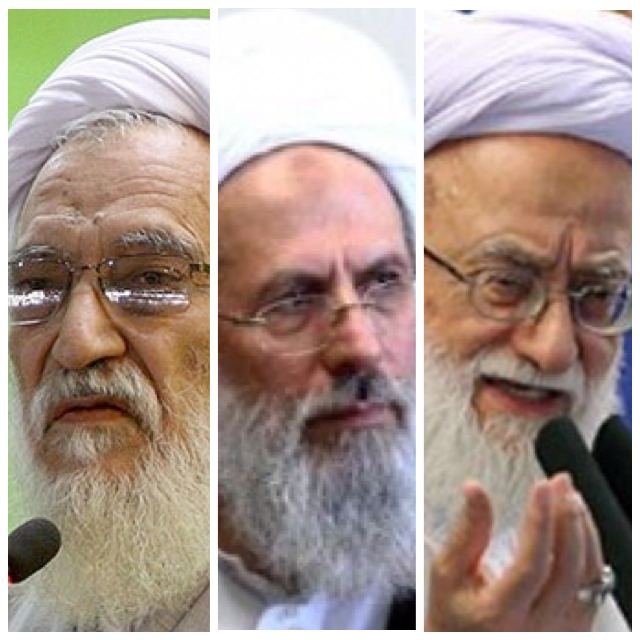
  • Ali Movahedi-Kermani, a radical Iranian cleric, also received support from Iran’s moderate factions. He has threatened to “trample upon America,” as well as bombS. and Israeli interests;
  • Mohammed Emami-Kashani, another radical cleric who won a seat on the assembly with the backing of moderates, has blamed the U.S. and Israel for creating al Qaeda;
  • Other election winners backed by reformists include Ayatollah Yousef Tabatabaeenejad, a religious radical who has called on civilians to use violence in order to enforce strict dress codes for women.

Kredo noted that other so-called reformist winners also have a history of calling for the destruction of Israel and America and reportedly sponsored attacks on political dissidents; one of whom Kredo quoted from.

Maryam Rajavi, president-elect of the coalition National Council of Resistance of Iran, whose main group is the MEK (PMOI), said that candidates were carefully screened to ensure their allegiance to Khamenei’s hardline camp.

“A glance at the list of candidates presented by the regime’s various factions leaves no doubt that the choice was merely between different factions responsible for suppression, execution, exporting terrorism, warmongering, and plundering the Iranian people’s wealth,” Rajavi said in a statement following the election.

By Michael Tomlinson
Filed Under: Blog, News Tagged With: Ali Razini, dori najafabadi, Featured, Ghorbanali Dorri-Najafabadi, Khamenei, mohammad reyshahri, Rouhani

Iran Lobby Working Hard to Spin Iran Elections

March 3, 2016 by admin

Iran Lobby Working Hard to Spin Iran Elections

Iran Lobby Working Hard to Spin Iran Elections

With the recent parliamentary elections in Iran, the regime and its allies are working hard to project the image of a moderate landslide setting the stage for a new era of peace, prosperity and happiness. Somewhere in there are probably also promises that eating ice cream doesn’t make you fat and pots of gold lie at the end of rainbows.

At the center of that spin control exercise stands the National Iranian American Council, the chief lobbyist and public advocate for the mullahs in Tehran, which sent its leaders out to talk to virtually any journalist that would listen to them about how great things turned out in Iran.

“The stunning setback of the hardliners in the elections is precisely why they opposed the Iran nuclear deal,” said Trita Parsi, president of the NIAC. “They knew that if successful, the Rouhani faction would benefit electorally from the significant achievement of resolving the nuclear issue and reducing tensions with United States.”

Parsi’s comments are the key message for regime supporters: that approval of the nuclear deal was the key for the moderate wins. It makes for a nice fiction, but it is also as blatantly wrong.

First, Parsi’s contention of a moderate win is beguilingly false since he ignores the months-long vetting process in which the handpicked members of the Guardian Council bounced over half of the 12,000 candidates that submitted for approval to appear on the ballot. Those that survived were largely approved based on their allegiance to the Supreme leader of the mullahs and adherence to the supporting the policies of the ruling mullahs, backed by the Revolutionary Guard.

Anyone who deviated from those goals was arrested and thrown in jail during a massive crackdown across Iran that saw journalists, dissidents and potential opposition politicians rounded up. Of course, Parsi and his colleagues did not utter a word of protest during these arrests.

In another quote given in an editorial in the Washington Post, Parsi added that hardliners “knew that if successful, the Rouhani faction would benefit electorally from the significant achievement of resolving the nuclear issue and reducing tensions with United States. These benefits would not just be limited to the parliamentary elections, but could establish a new balance of power in Iran’s internal politics with significant long-term repercussions.”

It’s the second falsehood Parsi preaches in claiming there are indeed factions splitting the Iranian regime, including a bloc of moderates aligned with Hassan Rouhani.

Where Parsi is wrong is his claim that the differences separating these so-called “faction” are political, when they are in fact more about power and greed.

The Iranian regime ranks as one of the most corrupt economies in the world with the Revolutionary Guard and the families of the mullahs running the regime deeply involved and controlling of virtually all the major industries in Iran, including petroleum, aviation, telecommunications, mining, shipping and manufacturing.

With the cash infusion of $100 billion in hard currency being made available, the mullahs and military are loathe to give up control of those assets, or the billions in foreign investment that will flow as a result of the nuclear deal. The fight over parliamentary seats is less about opening up Iranian society and broadening human rights and more about securing enough seats to control how that spoils of the nuclear deal get divided up.

The mullahs have long made clear their political strategy in crafting a regime modeled after China in which the economy is liberalized while maintaining tight political control over the people. In that manner, the parliamentary elections and claims of moderation by the Iran lobby make perfect sense. As Parsi and others proclaim moderation, the government is still left firmly in the hands of those intent on enriching themselves and not improving the lot of the Iranian people.

The deception by Parsi does go to some absurd lengths as he claims in an interview on The Real News that Ali Larijani, the current head of the parliament and overseer of the judiciary, is actually in favor of moderate policies.

“Ali Larijani, who is the current head of the parliament, is a conservative. And he’s been a conservative for a very long time, belongs to a very conservative and well-established family. But he has aligned himself with Rouhani most of the time on most issues. And he’s not considered right now to be in the anti-Rouhani camp,” Parsi claims.

It’s a silly claim when you consider that the regime’s judicial and police functions are firmly in control of hardliners that enforced the vetting process in the first place and removed all the opponents to Rouhani’s slate of “moderate” allies. This is also the same judiciary that has consistently imprisoned Americans, Christians and sentences children to death, and most recently snatched up Parsi’s friend and ally, Siamak Namazi, and threw him in prison without legal representation or charge.

The fact that Parsi called these “the most consequential non-presidential elections in Iran at least for the last two decades” in an interview with the Cato Institute, is even more absurd given that many would claim that the disputed 2009 presidential elections that were stolen and protested with mass demonstrations that were brutally put down violently by the mullahs were the most consequential elections in Iran since that was the last time the Iranian people actually took a stab at real regime change.

The last false argument being put forth by the Iran lobby is the contention that real change is possible down the road with the possibility of a new supreme leader being elected following the inevitable death of the 76-year old Ali Khamenei.

“In the short term the parliamentary elections will impact Iran’s economic policies. But for the long term, this assembly could elect the next supreme leader, which has greater long-term implications for Iran and its people,” said Reza Marashi, also of the NIAC.

It is laughable to think there will be any real possibility of installing a new top mullah that would deviate from the path the Islamic revolution has taken, or loosen the control the mullahs and Revolutionary Guard have over the country. For Marashi to think there would be any change over a long, incremental pathway ignores the abject suffering and brutality being meted out against the Iranian people every day.

When the Rouhani regime has overseen a record number of executions, far exceeding the high water mark set by Mahmoud Ahmadinejad, the idea of a loosening of the regime is merely a smokescreen.

Already Rouhani has seen fit to keep the vast majority of the billions in released funds in overseas accounts to help pay for the new military hardware Iran is busy buying from Russia and soon China. The Iranian people are unlikely to see any of it and ultimately their hopes for an improving economy will remain only an unfilled dream so long as the mullahs are in Power.

By Michael Tomlinson

Filed Under: Blog, News Tagged With: Featured, Iran deal, Iran Human rights, Iran Lobby, NIAC, Reza Marashi, Rouhani, Trita Parsi

Who Are These So-Called “Moderates” in Iran Elections?

March 1, 2016 by admin

Who Are These So-Called “Moderates” in Iran Elections?

Who Are These So-Called “Moderates” in Iran Elections?

The New York Times, among other news outlets, trumpeted the election results from Iran with great fanfare announcing “strong” gains by moderates and reformists in this weekend’s parliamentary elections. Predictably, the spin revolved around the notion that this was a step in the right direction towards a more moderate future in Iran.

“Though hard-liners still control the most powerful positions and institutions of the state, two national elections last week appeared to build on the slow but unmistakable evolution toward a more moderate political landscape — now and into the future,” wrote Thomas Erdbrink in the Times. “While the hard-liners still remain firmly in control of the judiciary, the security forces and much of the economy, the success of the moderate, pragmatic and pro-government forces seemed to give Mr. Rouhani political currency to push a course of greater liberalization of the economy at home and accommodation abroad.”

What Erdbrink and most other Western journalists miss is the simple fact that the mullahs in control of the regime – virtually all of the important sectors of power as Erdbrink notes – have allowed a smattering of candidates to run that can appear “moderate” when compared to the more vocal conservatives in power, but in fact all share the same loyalty to the aims of the Islamic state.

Revolution and regime change are not coming anytime soon to Iran under these mullahs no matter what rosy picture some media wish to paint.

What is even more amusing is that all the celebration is focused on the election of a small minority dubbed “moderates” in the lower house parliament, but in the 88-member Assembly of Experts, over three-quarters of the original candidates seeking to run were swept off the ballot before voting even began, leaving only hardcore supporters of top mullah Ali Khamenei to win seats.

As to whom actually won, the Wall Street Journal editorial board took a closer look at the winners and found them less than “moderate” and downright unsavory.

  • Mostafa Kavakebian. The General Secretary of Iran’s Democratic Party, Mr. Kavakebian is projected to enter the Majlis as a member for Tehran. In a 2008 speech he said: “The people who currently reside in Israel aren’t humans, and this region is comprised of a group of soldiers and occupiers who openly wage war on the people.”
  • Another moderate is Kazem Jalali, who previously served as the spokesman for the National Security and Foreign Affairs Committee of the Majlis and is projected to have won a seat. In 2011 Mr. Jalali said his committee “demands the harshest punishment”—meaning the death penalty—for Mir Hossein Mousavi and Mehdi Karroubi, the two leaders of the Green Movement that was bloodily suppressed after stolen elections in 2009. Those two leaders are still under house arrest.

According to the Journal, as for new Assembly of Experts, many of the “moderates” projected to have won seats were also listed on the hard-liners’ lists, since the ratio of candidates to seats was well below two, including:

  • Mohammad Reyshahry, a former Intelligence Minister believed to have helped spearhead the 1988 summary execution of thousands of leftists;
  • Ghorbanali Dorri-Najafabadi, another former Intelligence Minister believed to have directed the “chain murders” of the late 1990s; and
  • Ayatollah Yousef Tabatabainejad, a fierce opponent of women’s rights who has called Israel “a cancerous tumor.”

That seems like quite a slate of “moderate” new faces that got elected. Maybe Trita Parsi and Reza Marashi from the National Iranian American Council, can fly over and have lunch with these moderates, unless they are worried they might be arrested like their fellow Iran lobby supporter Siamak Namazi who now languishes in an regime prison.

“The political reality in Iran is that the Ayatollahs, backed by the Revolutionary Guards, remain firmly in control,” the Journal correctly points out.

The funny thing about the parade of optimistic and sunny news headlines is how they eerily echo the same notes of hope that came in the wake of the nuclear agreement only to be followed by grimmer headlines of illegal ballistic missile tests, detaining of American sailors, rocket launches at U.S. and French navy warships, recruiting Russia to fight in Syria and the largest refugee crisis since World War II.

Even as regime supporters laud these “moderate” wins, shocking news came of a village in southern Iran of a heinous incident announced by Shahindokht Molaverdi, the ironically named vice president for women and family affairs.

“We have a village in Sistan and Baluchestan province where every single man has been executed,” she said, without naming the place or clarifying whether the executions took place at the same time or over a longer period. “Their children are potential drug traffickers as they would want to seek revenge and provide money for their families. There is no support for these people.”

Maya Foa, from the anti-death penalty campaigning group Reprieve, said: “The apparent hanging of every man in one Iranian village demonstrates the astonishing scale of Iran’s execution spree. These executions — often based on juvenile arrests, torture, and unfair or nonexistent trials — show total contempt for the rule of law, and it is shameful that the UN and its funders are supporting the police forces responsible.”

Amnesty is particularly concerned about Iran’s execution of juveniles. In a report published in January, the group said Iran had carried out 73 executions of juvenile offenders between 2005 and 2015.

Sistan and Baluchestan, where the unnamed village is situated, “is arguably the most underdeveloped region in Iran, with the highest poverty, infant and child mortality rates, and lowest life expectancy and literacy rates in the country,” according to Ahmed Shaheed, the UN special rapporteur on the situation of human rights in Iran. “The province … experiences a high rate of executions for drug-related offences or crimes deemed to constitute ‘enmity against God’ in the absence of fair trials.”

Even as the Iran lobby celebrates these wins, an Iranian village has seen all the men in it killed indiscriminately by these same “moderates.”

By Laura Carnahan

Filed Under: Blog, News Tagged With: Featured, Iran Human rights, Iran Lobby, Iran Mullahs, Khamenei, Marashi, National Iranian American Council, NIAC, Reza Marashi, Rouhani, Trita Parsi

Iran Election Results Predictably Praised by Iran Lobby

February 29, 2016 by admin

http://www.theguardian.com/world/iran-blog/2016/feb/28/five-lessons-from-irans-2016-elections-tehranbureau

http://www.theguardian.com/world/iran-blog/2016/feb/28/five-lessons-from-irans-2016-elections-tehranbureau

As the Iranian regime counts the ballots from this weekend’s parliamentary elections, the Iran lobby is already hailing it as a momentous victory for “moderate” forces in Iran in what may be one of the most blatant obfuscations since Adolf Hitler’s Anschluss of Austria based on the pretext of being invited in to restore order.

“The stunning setback of the hardliners in the elections is precisely why they opposed the Iran nuclear deal. They knew that if successful, the Rouhani faction would benefit electorally from the significant achievement of resolving the nuclear issue and reducing tensions with United States. These benefits would not just be limited to the parliamentary elections, but could establish a new balance of power in Iran’s internal politics with significant long-term repercussions,” said Trita Parsi, head of the National Iranian American Council and lead cheerleader for the Iranian regime.

His absurd comment came in a piece in Huffington Post in which he failed to acknowledge the most glaring problem with his effusive praise: the handpicked Guardian Council of Ali Khamenei removed almost 90 percent of the “moderates” from the ballot during the months-long vetting process.

The only candidates left on the ballot, especially outside of Tehran, were devoted and dedicated candidates solidly aligned with Khamenei, the ruling mullahs and Revolutionary Guards’ leadership.

Taking a few scattered wins in and around Tehran and calling it a “moderate” win is akin to Parsi’s previous arguments about the nuclear deal being a moderating force for Iran and the West, but in its aftermath the regime has conducted illegal missile tests, arrested scores of dissidents and journalists and stepped up its war in Syria.

The money line from Parsi is when he says “In order to avoid a hardline backlash, the moderation of Iranian policies need to happen at a moderate pace.” We can only assume Parsi thinks reform in Iran happens at a snail’s pace. For him and the rest of the Iran lobby, electing one moderate out of 12,000 thrown off the ballot would be considered “progress,” which is why his proclamation of moderates is so silly, especially when we consider that candidates backing Hassan Rouhani are dubbed “reformists” in a stretch of logic that hurts the brain when thinking about it.

Rouhani has turned into anything but a moderate. Rouhani’s sole purpose in being hand selected by Khamenei and all other candidates cleared from the field beforehand was to convince the West of a moderate image and secure a deal lifting crippling sanctions. In his tenure, he has instead presided over the highest increase in executions ever in Iran, cracked down hard on journalists and presided over three proxy wars in Syria, Iraq and Yemen in a show of extremist Islamic expansion that Mahmoud Ahmadinejad, his much-reviled predecessor, could only dream about.

The fact that Rouhani supporters could only win 30 seats in heavily populated Tehran and lose across the rest of the country indicates the usual pattern of deceit coming from the mullahs: Let the “moderates” claim a victory for global media consumption in Tehran, but dominate and assure control everywhere else in Iran.

The recipe for electoral success has worked since decades ago and has allowed the mullahs to play with the world, around their internal fighting. While the infighting is only about their share of power and both “moderates” and “Hardliners” are the same when it comes to executions, domestic repression, and their support for terrorism abroad. Take for instance the so called moderate Rouhani, the reign of executions under his watch has been much larger than his “hardliner” Ahmadinejad, and he and his Foreign Minister Zarif (Another person that is referred to as “moderate” within the mullah’s regime) have continuously expressed their support for the Syrian dictatorship, the Hezbollah and most extremist movements in Iraq and Yemen. Under Rouhani and his predecessors, virtually all legitimate dissident groups and political parties have long been outlawed and even the nascent Green Movement which was crushed in 2009 and was led by leaders arguably still cozy with the regime leadership has no recognition or legitimacy within Iran.

Add to that the contention by the Iranian regime that democracy was served by the participation of an estimated 33 million of Iran’s 55 million eligible voters and you find remarkable similarities with claims by other totalitarian regimes such as the old Soviet Union, North Korea and Nazi Germany in which near universal participation by the electorate was often forced and compulsory as was who to vote for. The Iranian regime is no different.

“Iranian voters delivered a strong message to the elite that political and social aspirations that have long been unmet need to be addressed more robustly,” said Reza Marashi, also of NIAC who claimed voters wanted change, even if it was exchanging one regime diehard for another.

Aaron David Miller, a vice president at the Woodrow Wilson International Center for Scholars, noted in an editorial in the Los Angeles Times that “none of this favors Iran’s pragmatists and centrists, let alone its reformers. In fact, as the International Crisis Group notes, in Iran historically ‘external loosening’ is balanced with ‘internal stiffening.’

“That is what happened after the 1988 cease-fire in the war with Iraq, and after the 2003 nuclear agreement with Britain, France and Germany, when the powerful Guardian Council disqualified reformist candidates in the next elections and conservatives regained their parliamentary majority. A step forward in a highly authoritarian and ideological system can easily produce a few steps back, or at least to the side,” Miller notes.

The Guardian, had similar takeaways in looking at the elections, including that there are no simple divisions of “moderates” and “reformists” since candidates were disqualified less on political views and more on devotion to the ruling mullahs.

In describing Rouhani, Gareth said “Iran’s president has proved himself an astute, hard-headed operator,” adding that “politically, Rouhani will need to maintain public support with an eye to being re-elected as president next year. Anecdotal reports of a lower turn-out in poorer parts of Tehran may reflect most strongly a wider sense among Iranians they are not benefiting from the easing of sanctions.”

While the Iran lobby may be praising this weekend’s election results, the reality of a rigged election means nothing really changed as most Americans tuned into the Oscars instead.

By Michael Tomlinson

Filed Under: Blog, News Tagged With: Featured, hassan rouhani, Iran deal, Iran Human rights, Iran Lobby, Reza Marashi, Trita Parsi

Iran Elections Results Are In a Day Early: The Mullahs Won

February 26, 2016 by admin

Iran Elections Results Are In a Day Early: The Mullahs Won

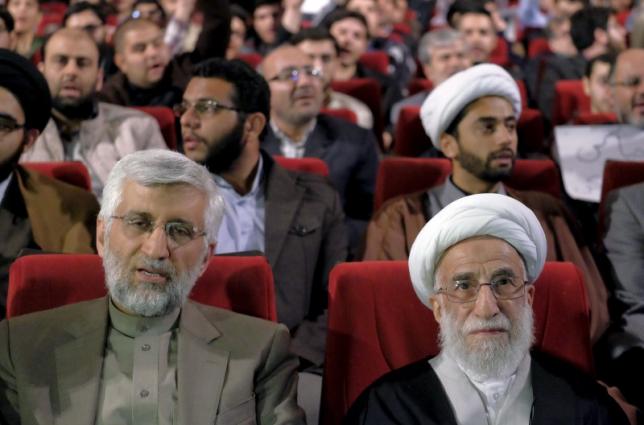
Ayatollah Ahmad Jannati (R), a candidate for the upcoming vote on the Assembly of Experts, and Iran’s former chief negotiator Saeed Jalili attend a conservatives election campaign gathering in Tehran February 24, 2016. REUTERS/Raheb Homavandi/TIMA

The headlines screamed out from various news publications around the world on the day before parliamentary elections were to be held in Iran:

“Moderates Test Hardliners’ Grip on Power in Iran Vote” – Reuters

“Iran’s Moderates Face a Major Challenge in First Elections Since the Nuclear Deal” – TIME

“Iran Reformists Hoping for Boost in Parliament Election” – New York Times

“Why Iran’s Parliamentary Elections This Friday Are So Crucial” – The Nation

Most of the international media seem to be suffering from the same form of mass amnesia in that they have conveniently forgotten the fact that the elections were rigged months ago when the Guardian Council, whose members are handpicked by top mullah Ali Khamenei, kicked off virtually all candidates from ballots with even a hint of moderation or lack of ideological purity.

Just as it has done in every election since the mullahs seized the revolution in 1979 and turned Iran into an theocratic dictatorship, there is no doubt to the outcome. There was no doubt when Mahmoud Ahmadinejad was re-elected in a blatant steal of the ballot box and there was no doubt when Hassan Rouhani was elected after virtually all potential challengers were rejected by the same Guardian Council that mowed down this election.

So as Iranians go to the polls, they are going to find themselves confronted with few choices and fewer options if they truly want regime change. Not only have any potential “moderates” been knocked off the ballot, but true opposition parties and dissident groups are outlawed and membership in any is grounds for arrest and even execution.

While the U.S. is engaged in a presidential race marked by hyperbole, multiple debates, flooding of social media and a months-long process of examination, questioning and arguing with candidates, the mullahs in Iran spent months dumping candidates and allowing only one week of actual campaigning.

But some media have tried prying the lid the mullahs have placed on these elections and are running stories that look more critically at how these elections are a sham and already decided.

David Blair, writing for the Telegraph, visited Qom, one of Iran’s holiest cities, and found residents there with little to no choices available to them.

“If any of the inhabitants of Iran’s second-holiest city wish to vote for reformists in Friday’s election, they will be disappointed,” he writes. “Every moderate candidate who tried to stand in Qom has already been disqualified, leaving the 1.1 million people of this desert city – known as the Shia Vatican – to choose between different brands of hardliners.”

“The voting that will take place in Qom sums up everything important about Iran’s election. On the face of it, people will have the freedom to choose both a new Majles, or parliament, and a new Assembly of Experts, the body which appoints and supervises the Supreme Leader, Ayatollah Ali Khamenei,” Blair correctly points out. “In reality, another committee in Iran’s labyrinthine power structure, the Guardian Council, has already vetted every candidate for both elections, banning almost half of the 12,000 hopefuls from standing and weeding out most of the reformers.”

Outside of Tehran, Blair and other journalists have cities and communities in more rural areas with virtually no moderates on any ballot and limited campaigning with most Iranians resigned to picking from lists of hardliners vs. more hardliners.

A senior fellow at the Washington Institute for Near East Policy, writing in the Wall Street Journal, acknowledged the same situation playing out.

“The upcoming vote will largely mirror past elections in Iran, being neither free nor fair. The candidates have been closely screened and the outcome is expected to uphold the largely conservative makeup in parliament and the Assembly of Experts. In addition, the victors will remain largely dependent on military institutions, namely the Islamic Revolutionary Guard Corps. Moderates will stay marginalized in this arrangement and face intensified pressure from hard-line colleagues,” Khalaji said.

He goes on to point out that Rouhani’s election was devoted to getting a nuclear deal done to relieve the regime of crippling economic sanctions.

“Mr. Rouhani has focused most of his energy on the nuclear deal. He has not improved the dismal human rights situation in Iran”… During his tenure, military and intelligence suppression of political activists has remained robust and effective,” he writes.

“Presidential candidates in 2017 will need to establish strong relations with the supreme leader and his apparatus, especially the Revolutionary Guards, and are likely to succeed by reassuring these entities that their political and economic interests will not be undermined,” he added.

The fact of the matter elections in Iran are already pre-determined. The Revolutionary Guards and religious clergy exert overwhelming control of the country’s economy and industries and quickly stifle any dissent by tossing dissidents in prison and hanging them publicly to deter any future opponents.

That control will almost certainly continue to flow through regime leaders such as Ahmad Jannati who will be a shoo-in for re-election to the 88-member Assembly of Experts and will also shepherd the process to ensure the replacement for Khamenei is just as ideologically pure and committed to the Velayat-e-Faqih and more important keep the mullahs hold on power intact.

In remarks echoed by Khamenei, Jannati this week accused the United States and Britain of trying to influence Friday’s votes.

“The United States and the United Kingdom were trying to take advantage of the Iranian elections and send their agents and infiltrators into the Assembly of Experts, but God helped us and we managed to identify and block them all,” he was quoted as saying by the Fars news agency on Wednesday.

Jannati is a clear example of the type of extremist Iran will be electing and it was already decided long ago. Today’s vote is just a formality.

By Michael Tomlinson

Filed Under: Blog, News Tagged With: Featured, Iran, Iran deal, Iran Election, Iran Elections 2016, Iran Human rights, iranelections2016, Iranian election

Iranian Regime Use Boogeyman of Great Satan to Control Elections

February 23, 2016 by admin

Iranian Regime Use Boogeyman of Great Satan to Control Elections

Iranian Regime Use Boogeyman of Great Satan to Control Elections

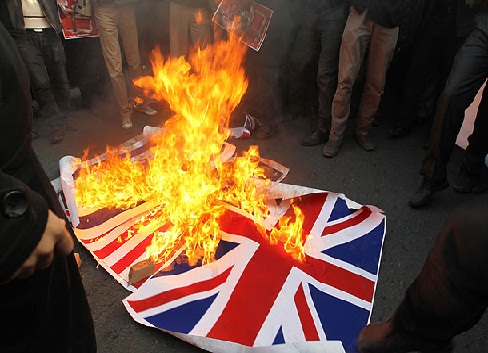
As parliamentary elections for the Iranian regime approaches, the regime continue their verbal drumbeat blaming the U.S., Great Britain and anyone else not named “Iran” for meddling in the elections. The latest verbal volley came from Hassan Firouzabadi, the chief of staff of the regime’s armed forces, who accused the U.S. and Great Britain of meddling by campaign for and against certain candidates.

“Such interference is [part of] aggressive strategies adopted by the US and Britain toward the Iranian nation, and the country’s officials should not underestimate it,” Firouzabadi said on Saturday.

He added that the “impudent” move by arrogant powers, including the U.S. and Britain, would provoke the wrath of the “revolutionary” Iranian nation.

Of course the good general neglected to mention any specific examples of meddling in his diatribe, but that is par for the course for the regime to hurl invective without any evidence, proof or backing. The truth is that there is no meddling going on or intrusive acts, especially from an Obama administration which seems intent on appeasing the mullahs in any way imaginable.

A compliant and friendly U.S. government though doesn’t fit the Islamic revolutionary beliefs held near and dear to the mullahs as their means of oppressing the Iranian people in what top mullah Ali Khamenei affectionately calls the “resistance economy;” an economy designed to keep Iranians struggling, impoverished and dependent on the regime for subsidized fuel, food and medicine.

It serves the regime’s purposes to keep blaming the U.S. and rest of the West for all the ills that have befallen Iran, especially during the time of economic sanctions, but since those have been lifted as part of the nuclear deal negotiated last summer, the mullahs are caught in the bind of having to explain to the Iranian people why things – like the economy – remain so bad under their stewardship.

For the mullahs, continued scapegoating of the U.S. is about the only excuse they have left to divert blame away from their own corruption, incompetence and mismanagement. It is also the strategy the Iran lobby follows in turning every issue into a blame game against the poor mullahs of Tehran.

All of which is a behavior that is only reinforced when the Obama administration fails to stand up aggressively to the regime’s misbehavior, thereby engendering even more egregious acts by the Iranian regime.

Case in point is the letter sent from Iranian general Mohsen Rezaei to Hassan Rouhani in which he detailed how to force even more concessions from the U.S. by aggressively building longer-range ballistic missiles.

The letter follows the capturing of U.S. sailors, the firing rockets near a U.S. carrier, and the flying of drones over U.S. and French carriers and it claims the U.S. only was willing to make a nuclear deal because Tehran aggressively pursued a renegade nuclear bomb program that violated UN sanctions.

“Just as Iran’s success in developing 20,000 centrifuges was a slap in the face of the United States and forced the Americans to come to the negotiating table and recognize our right to enrich uranium, I am hoping that with your support, the range of Iran’s missiles will exceed 5,000 kilometers [3,106 miles],” Rezaei wrote Rouhani.

The expanded reach of the missiles would threaten the U.S. and its allies by putting American military installations and Europe within range of an Iranian missile, which currently can only travel 2,000 kilometers.

If the regime were to develop a longer-range missile, no doubt using technology already developed and tested by North Korea, it would pose a significant threat to most of Europe and Asia. Not surprisingly, the Obama administration has been largely silent and the Iran lobby has been deaf and mute on these latest provocations.

North Korea is an interesting case study, since the efforts to rein in that rogue nation’s nuclear program through international monitoring – similar to the deal reached with the Iranian regime – has been an utter failure and has only allowed the North Koreans to assemble a small arsenal of nuclear warheads, but also develop intercontinental ballistic missile capability which it has been eager to sell to Iran for hard currency; of which the mullahs are swimming in $100 billion of it courtesy of the nuclear deal.

All of which is fueling a wild new arms race throughout the Middle East as the Iranian regime’s neighbors worry – and rightly so – about the mullahs intentions. Support of proxy wars in Syria, Yemen and Iraq has not bred much confidence in Iran’s neighbors, nor has an $8 billion shopping spree in Moscow for advanced weapons.

Escalating conflicts driving Middle Eastern nations to buy more weapons include conflicts in Libya, Yemen, Syria and Iraq, along with violence in Egypt and Turkey, says Ken Pollack, a senior fellow researching the Middle East at the Brookings Institution.

“We are seeing a region on fire,” Pollack says. “A lot of countries feel the need to increase their military capabilities to intervene in those conflicts or to fend off rivals.”

Pollack says the top rivalry in the region “consuming ammunition” is between Iran and Saudi Arabia and their allies, especially in Yemen where Tehran is backing the Houthi opposition to the Saudi-supported government. Iran is also supporting embattled Syrian President Bashar Assad while Saudi Arabia is sending weapons to groups opposing his government, but Pollack says the two nations appear to be vying for influence through other proxy wars in the region.

As long as the Iranian regime is allowed to continue the fantasy of blaming its ills on others such as the U.S., the longer the mullahs will feel safe in continuing on their path of destruction and oppression.

By Michael Tomlinson

Filed Under: Blog, News Tagged With: Featured, Iran, Iran deal, Iran Economy, Iran sanctions, Khamenei, Rouhani

Human Rights Remain Under Assault by Iranian Regime

February 22, 2016 by admin

Human Rights Remain Under Assault by Iranian Regime

Human Rights Remain Under Assault by Iranian Regime

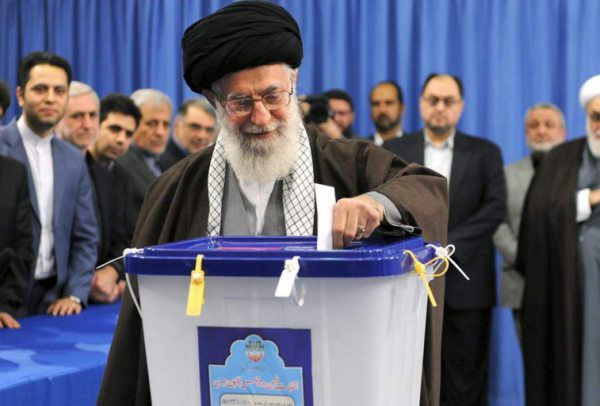
Next week the Iranian regime will conduct parliamentary elections that most news media and analysts have already called rigged because of the customary elimination of over two-thirds of the candidates seeking seats in the lower parliament and the more powerful Assembly of Experts.

The regime’s Guardian Council, with its handpicked members by top mullah Ali Khamenei, exercised their usual due diligence in removing any candidate that even had a hint of moderation or deviation from the Islamic revolutionary principles that guide the regime.

What is left are only those candidates that pledge religious, ideological and political fealty to the mullahs that run the regime and hold sway over virtually all facets of life in Iran.

This winnowing process empowers the mullahs and allows them the freedom and discretion to continue the unabated crackdown on human rights in advance of the elections with no cause for worry or recrimination from the international community, but there are news accounts that leak out depicting the brutality being visited on ordinary Iranians – often smuggled out by members of the dissident community at great personal risk.

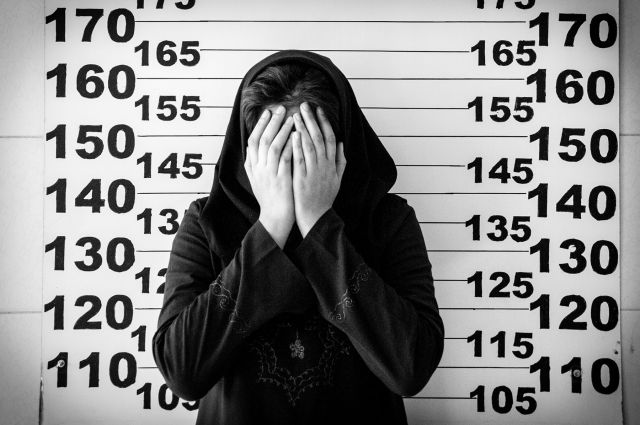
One of those moving accounts was published in Quartz online in a photo essay by a photographer who spent four years researching women and girls being held in Iranian prisons, many awaiting death sentences.

“My main goal in this project was to understand how young girls could end up in jail in the first place,” the prizewinning photographer tells Quartz. “I spent time talking to them, they were nice and kind.”

In Iran, the death penalty can be applied to minors, and in 2014, a United Nations report estimated that at least 160 juvenile offenders were on death row in the country.

While according to a Jan. 25 report by Amnesty International, 73 juvenile offenders were executed in Iran between 2005 and 2015.

The compelling photos paint a grim portrait of a regime willing to kill young girls, often for crimes committed by male acquaintances who escape punishment, leaving it to the girls to pay the ultimate price in their stead.

It’s a situation that the Iran lobby has been virtually silent on. A careful perusal of the websites, blogs and social media feeds for regime supporters such as Trita Parsi, Reza Marashi and Tyler Cullis of the National Iranian American Council or Ali Gharib or Lobelog.com reveal hardly a word of criticism or protest over the heinous violations. What they have protested though has been the incarceration of Siamak Namazi, a dual U.S.-Iranian citizen who was detained by regime authorities and not part of the prisoner swap that occurred as part of the nuclear agreement.

It is ironic that Namazi’s case is the one that earns the attention of the Iran lobby because of the close relationship he has with Parsi and his role in helping launch the NIAC and as an outspoken advocate of the nuclear deal with the regime.

Now Namazi is experiencing the same denial of legal representation that was forced on other American hostages such as Christian pastor Saeed Abedini and Washington Post reporter Jason Rezaian. We can only hope now that the shoe is on the other foot, these supporters of the regime would be more vocal in their criticisms, but we doubt it.

These elections though will provide a glimpse though of the lie that is Iranian regime democracy, which was discussed in an editorial in the New York Post who took to task the policy of appeasement exercised by the Obama administration:

“When it runs out of plausible excuses for its appeasement-plus policy on Iran, the Obama administration advances one argument as final line of defense: showing goodwill toward the Islamic Republic would help ‘moderates’ secure a greater share of power in Tehran with the hope of an eventual change of behavior by the ruling mullahs.”

“But who are the ‘moderates’ that Obama hopes to promote Tehran? A trio of mullahs consisting of former President Hashemi Rafsanjani, former Security Minister Dorri Najafabadi and current President Hassan Rouhani forms the core of the faction that Obama hopes would sail to victory next week,” the article writes. “The triumvirate has a history of masquerading as moderates.”

He recounts how these supposed moderates have often espoused political reforms, but never offered or implemented any political reforms while holding office.

“Rafsanjani and his hand-picked successor Khatami governed for 16 years, but never offered a single political reform let alone implementing any. Their successor Rouhani has had more than two years to show that he follows the same path. During his presidency Iran has become world leader in the number of executions and political prisoners,” he adds.

Rouhani is exercising the playbook that Rafsanjani and Khatami exercised in portraying himself as a moderate when he has no intention of supporting reforms and has openly talked about his admiration for the so-called “Chinese Model” which emphasizes economic development with control of the government firmly in the Communist Party’s hands. Rouhani envisions a similar situation with the lifting of economic sanctions bolstering the flow of money to regime coffers, but no loosening of political restrictions.

The Financial Times took note of the Iranian public’s distinct lack of enthusiasm for upcoming elections against the backdrop of a sputtering economy still stifled by mass corruption and a focus on diverting funds to supporting the proxy wars in Syria, Yemen and Iraq.

“The subdued seasonal shopping just one month before Norouz, the Iranian new year holiday, is adding to widespread gloom about a prolonged economic stagnation that has also dimmed public enthusiasm for the crucial upcoming elections,” the Financial Times writes. “Hassan Rouhani, the country’s centrist president, is now blamed by many for failing to deliver on his election campaign promises to help improve the economy with the nuclear agreement. Although inflation has shrunk — from a peak of about 40 per cent in 2013, when Mr. Rouhani took the reins, to about 13 per cent today, according to central bank figures — economic growth is next to zero and people are unwilling to purchase goods.”

While the election results may be a forgone conclusion, the hope remains that an oppressed Iranian people will someday soon see true regime change.

By Michael Tomlinson

Filed Under: Blog, News Tagged With: Featured, Iran, Iran Human rights, Iran Lobby, Khamenei, NIAC, Reza Marashi, Rouhani, Trita Parsi

Kickoff of Campaigning in Iran Hides Suppression of Human Rights

February 19, 2016 by admin

Kickoff of Campaigning in Iran Hides Suppression of Human Rights

Kickoff of Campaigning in Iran Hides Suppression of Human Rights

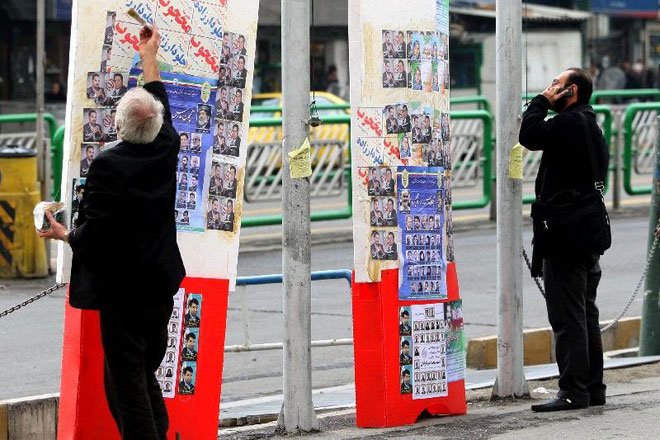
The campaign season has kicked off and we’re not talking about the U.S. presidential campaign. In Iran the official campaign period for parliamentary elections for slates of candidates that passed ideological muster.

For most people living in democracies, the Iranian regime’s election system can be nothing short of baffling. It’s a system that begins and ends with a focus on ideological and religious purity and adherence to the Islamic revolutionary ideals it was founded on.

It is also a peculiar system in which the process of reviewing, vetting and examining candidates takes seven weeks to process, but the actual campaign season lasts just seven days.

Of the 12,000 candidates who were submitted for consideration to run for parliamentary seats and positions on the Assembly of Experts, nearly half of them were eliminated from the ballot by the Guardian Council, which is comprised of six mullahs and six law experts all appointed directly and indirectly by top mullah Ali Khamenei. The mere fact that the regime is empowered to eliminate any candidate it deems unfit to run virtually pre-ordains any election outcome in the regime’s favor.

In the case of the Assembly of Experts, of the 800 that applied, only 161 – all men – were approved by the Guardian Council; a miniscule 20 percent.

It’s also noteworthy that in Iran, there are over 250 registered political parties, but virtually none of them represent any true opposition groups such as the Mujahedeen-e-Khalq (MEK), a long-time resistance group which is outlawed and the regime vigorously pursues any of its members. The last two main reform-minded political parties were officially banned after the election fiasco of 2009 which resulted in massive protests that were violently put down.

Because of the complete control the regime has over political parties and the ballot, one would think that would be enough to guarantee any election, but in Iran, all ballots are also counted manually and subject to all kinds of shenanigans just in case any candidate who won a seat had a sudden change of heart and wished to oppose the mullahs.

The parliament often serves simply as a rubber stamp for Khamenei’s policies since it lacks the constitutional power to oppose foreign policy, military or other matters of state security. The approval of the nuclear deal is an example of that kind of blank check for Khamenei and his puppet, Hassan Rouhani.

According to Agence France-Presse, “the nuclear deal has partly ended Iran’s isolation but it has been followed by warnings from Khamenei that the military must guard against economic and cultural ‘infiltration’ by foreign actors who aim to damage the Islamic republic’s revolutionary principles.”

“Although parliamentarians backed Rouhani on the nuclear deal they did so less out of a sense of support for the president than because Khamenei made it clear he wanted sanctions lifted,” said AFP.

The closed nature of the regime electoral process allows the Iran lobby a certain flexibility to portray it in a more flattering light; not in the sense that’s at all fair, but rather in portraying certain candidates as “moderates” when in fact very few who pass vetting would be considered a true moderate, let alone a dissident reformist.

An example of that kind of PR spin control comes from the Iran lobby supporters such as the National Iranian American Council (NIAC) which has consistently pushed the idea that the elections would shine a light on growing moderate forces as a result of the nuclear deal.

But the crackdown on dissidents in advance of the elections, wiping off the ballot any conceivable opposition candidates, including the elimination of virtually all women candidates have forced even reliably supportive blogs such as Lobelog.com to print some guest columns describing the elections as “fixed.”

“In order to pass through the punishing vetting process and stand for election, Iranian citizens must comply with a huge set of restrictive criteria, including holding a masters’ degree, adhering to Islam, showing loyalty to the Constitution and the Supreme Leader, and having a spotless political (and mostly spotless criminal) record,” wrote Small Media, a London-based digital advocacy group, in a guest column.

“As evidenced by all the available data, these upcoming elections have been very tightly managed by Iran’s conservative establishment, with the Guardian Council weeding out more than half of the country’s hopeful parliamentary candidates during the vetting process,” Small Media added in what was the closest thing to a criticism of the Iranian regime Lobelog.com has published in a long time.

The fact that there is no real opposition to the mullahs allowed and the discussion of moderate elements within regime politics is mainly for international media consumption, it’s pretty obvious why there is so much concern in various capitals over what the mullahs plan on doing after elections when they will wave a so-called “election mandate” to continue their extremist policies.

This is why the results of the upcoming U.S. elections will likely have far more impact on what happens to the regime since the Obama administration has made clear its desire to appease the mullahs at every turn.

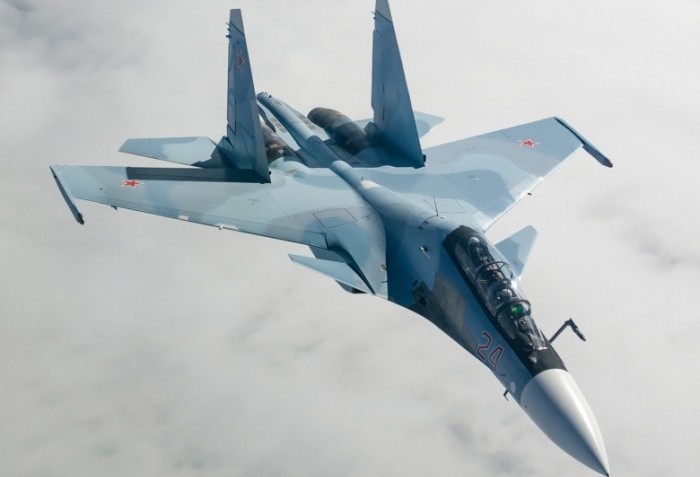
The latest example was the recent announcement of an $8 billion agreement by the Iranian regime to buy advanced military hardware from Russia, including the co-production of Su-30 fighter jets which now appear to be in violation of United Nations sanctions imposed as part of the nuclear deal banning the developing of nuclear-capable delivery systems such as bombers and missiles.

“The U.N. resolution to endorse the flawed Iran nuclear deal actually gives the United States and other members of the Security Council the power to review and legally block arms sales by Russia or other actors to Iran,” Sen. Mark Kirk (R., Ill.), a critic of the nuclear accord, told the Washington Free Beacon. “But as Russia and Iran further escalate their use of indiscriminate military force in the Middle East, the administration appears wholly unwilling to use this power.”

According to the terms of the U.N. resolution governing the nuclear agreement, the U.S. and other Security Council members are provided with the power to approve “in advance on a case-by-case basis” most conventional arms sales to Iran.

The statute specifically applies to the “supply, sale, or transfer” to Iran of many conventional arms, including “battle tanks, armored combat vehicles, large-caliber artillery systems, combat aircraft, attack helicopters, warships, missiles, or missile systems,” according to the resolution.

It seems that not only are regime elections fixed, but it seems UN sanctions are rigged as well.

By Michael Tomlinson

Filed Under: Blog, News Tagged With: Featured, Iran Election, Iran Election 2016, Khamenei, Lobelog, mek, Mujahedeen-e-Khalq

Iran Lobby Ignores Upcoming Iran Election Shenanigans

February 18, 2016 by admin

Iran Lobby Ignores Upcoming Iran Election Shenanigans

Iran Lobby Ignores Upcoming Iran Election Shenanigans

On February 26, Iran will hold its parliamentary elections and similar to almost every election held since the Islamic revolution in 1979, the results will be largely a forgone conclusion since the mullahs control who goes on the ballot in the first place and in the case of the top spot – currently occupied by Ali Khamenei – that is a position that doesn’t even get voted on by the public in a process that old-line Soviets would find reminiscent of the Politburo.

Michael J. Totten, writing in World Affairs, took to task some idiotic observations made by Max Fisher in Vox magazine in which Fisher waxes rapturously about how the Iranian election could be historic. It the same kind of nonsense first advocated by the Iran lobby, most notably bloggers Jim Lobe and Ali Gharib, the National Iranian American Council and other regime advocates such as Paul Pillar.

The notion that the nuclear deal has set the stage for a historic election in which moderates and dissidents will finally get a fair shake and opportunity to put their stamp on the Islamic state moving into the 21st century is about as realistic as Boko Haram suddenly deciding to endorse women’s rights.

The truth of the matter, as Totten rightly points out, “let’s leave aside the blatant vote-stealing in Iran’s 2009 presidential election, when Mahmoud Ahmadinejad was declared the winner in districts that opposed him as overwhelmingly as San Francisco opposes Dick Cheney. Nevermind that disgraceful episode.”

“Elections in Iran are rigged even when they aren’t rigged,” Totten said. “Supreme Leader Ali Khamenei hand-picks everybody who runs for president. Moderates are rejected routinely. Only the less-moderate of the moderates—the ones who won’t give Khamenei excessive heartburn if they win—are allowed to run at all. Liberal and leftist candidates are rejected categorically.”

In the case of the position of president of the regime, a position held by Hassan Rouhani, Totten points out that “he’s not quite a figurehead. He can tinker with a few things around the edges. But the country is run by the unelected Supreme Leader, the Guardian Council, and the Revolutionary Guard Corps, which is officially designated as a terrorist organization.”

NIAC hacks such as Trita Parsi and Reza Marashi have argued that “moderates” will be empowered in a resurgent Iran and that will be reflected in more moderates being elected to the upper legislative body, the Assembly of Experts which nominally selects the new Supreme Leader when Khamenei dies.

Nothing could be further from the truth. The Guardian Council dumped thousands of potential candidates, the overwhelming majority of them more moderate than the ruling mullahs in a similar political exorcism it conducted during Rouhani’s election when it cleared the field for him to run virtually unopposed.

Let’s also consider that a “moderate” in regime politics is like calling someone a moderate who opposes hanging a political dissident, but doesn’t mind locking up a political dissident; in much the same way as Rouhani was hailed as a moderate, but since his ascension he has presided over more executions in his first term than even Ahmadinejad carried out.

In another sign that the elections are going turn out in favor of Khamenei and his cronies no matter what the actual vote is, Khamenei’s office issued a press release through regime-controlled media warning of “enemy” efforts to undermine the elections.

The statement read in part: “Their plot for the February 26 elections is to undermine the Guardian Council and question its decisions,” Ayatollah Khamenei said, “describing the Council as one of the fundamental institutions of the Islamic Establishment, which the US has been strongly opposed to since the victory of the Islamic Revolution.”

“When the Guardian Council’s decisions are called into question, the elections would be perceived to be illegal, and, consequently, the elected parliament as well as the laws it ratifies would be deemed illegal, the Leader explained.”

The regime learned its lessons from the 2009 election debacles that resulted in violent street demonstrations that had to be put down with bloody consequences and is doing all it can to pre-ordain the results and impose order such that there would be no repeat of civil disobedience.

All of which has not gone unnoticed by an American public who’s opinion of the regime’s leadership has astonishingly remained virtually unchanged since the 1980s according to a new Gallup Poll released this week.

A stunningly low 14 percent of Americans have a favorable viewpoint of the regime in a benchmark for futility that has not budged in spite of all the public relations and social media posturing conducted by the Iran lobby. It’s nice to see that no matter how many tweets Trita Parsi puts out, Americans remain skeptical and wary of a regime that has put to the hangman’s noose over 2,300 people under Rouhani.

By Michael Tomlinson


Filed Under: Blog, Current Trend, News Tagged With: Featured, hassan rouhani, Khamenei, National Iranian American Council, NIAC, Reza Marashi, Trita Parsi

Iran Lobby Attacks Saudi Arabia to Distract from Worsening Syrian Situation

February 16, 2016 by admin

Iran Lobby Attacks Saudi Arabia to Distract from Worsening Syrian Situation

Iran Lobby Attacks Saudi Arabia to Distract from Worsening Syrian Situation

There is a certain reliable predictability in what the Iran lobby will write about and advocate. It will always defend the Iranian regime from any potential sanctions no matter how egregious its acts. It will always stay mute on horrific human rights violations or terrorist acts springing from Tehran. It will always find someone else to blame for the region’s troubles that come directly from Iranian actions.

Reza Marashi, the research director for the National Iranian American Council and one of the staunchest defenders of the regime, penned an editorial in The Cairo Review which essentially places blame on Saudi Arabia for the all the ills befalling the Middle East. It is an all-too predictable attempt at shifting blame away from Tehran and dumping it on Riyadh.

Among the literary ruins of his diatribe lie a few choice nuggets of deception such as:

“The Obama administration rightly recognizes the aggressive regional policies of both Iran and Saudi Arabia. But here’s the catch: Tehran has been willing to negotiate de-escalation for nearly three years. Washington has encouraged it. To date, Riyadh has refused,” Marashi writes.

The remarkable thing about Marashi’s editorial is that you could trade places between Saudi Arabia and Iran and his editorial would make perfect sense. For example, the previous piece would read now as:

“The Obama administration rightly recognizes the aggressive regional policies of both Iran and Saudi Arabia. But here’s the catch: Riyadh has been willing to negotiate de-escalation for nearly three years. Washington has encouraged it. To date, Tehran has refused.”

In this reality, the truth actually comes out correctly! Tehran has been the sole reason why the Syrian civil war escalated into the conflagration it has become. Top mullah Ali Khamenei and his handpicked puppet Hassan Rouhani made the calculation that keeping Syrian dictator Bashar al-Assad in power was their only hope of maintaining a Shia arc of influence stretching from the Mediterranean Sea to the Indian Ocean through Syria, Iraq and Yemen.

If Iran’s chief regional ally was allowed to fall, the Iranian regime’s position would become precarious and the very real possibility of regime change would finally be available to the overwhelming numbers of ordinary oppressed Iranians who yearn for freedom from the yoke of theocratic control.

Instead, the mullahs went all in by first pouring billions of dollars into the Assad regime to keep it afloat after most of the world imposed harsh sanctions for the use of barrel bombs and chemical weapons on Syrian and opposition civilians.

Then Tehran directed its terrorist proxy Hezbollah to pour fighters into Syria while at the same time it recruited and coerced Afghan refugees in Iran to enlist and shipped them off to fight. Even with all this support, Assad’s regime was on the verge of crumbling from opposition fighters, forcing Rouhani to beg Russia’s Vladimir Putin to intervene and throw Moscow’s weight into the fray to save the Iranian regime’s proverbial bacon.

Even as Syrian peace talks have taken place in Geneva, Marashi contends that Saudi Arabia has no place at the table which is ironic since Marashi conveniently ignores the fact that all lines of conflict flow back to Tehran and Saudi Arabia is intricately caught up in this web with the Iranian regime’s sponsorship and support of Houthi rebels in Yemen who have brought another war to the Saudi Arabian border; a fact Marashi neglects to mention.

Marashi further contends that the nuclear deal with Iran did not pre-ordain regional conflicts as a result. In fact, that is exactly what it has done. The lifting of economic sanctions and the awarding of over $100 billion in cash to Iran has caused ripples far and wide as Tehran embarked on a mass shopping spree including sophisticated Russian anti-aircraft missiles and now an agreement to buy advanced Sukhoi Su-30 Flanker fighters.

The rapid re-armament of Iran has justifiably spooked its neighbors who plainly see the results of regime aggression and adventurism. Their concerns have sparked talked of a nuclear arms race as Iran’s neighbors seriously weigh their options in pursuing comparable weapons to the Iranian regime, even raising the specter of a new nuclear arms race – a glaring point that Marashi neglects to remark on.

The total commitment of the Iranian regime to support Assad manifested itself with a demand from regime foreign minister Javad Zarif that Iran and its allies in Syria won’t allow a cessation of hostilities in Syria to enable opponents of the Assad regime to “regroup.”

The demand to press the fight against Assad’s opponents by the Iranian regime recognizes that Iran cannot sustain an indefinite war, especially as it drains that $100 billion credit line quickly and global petroleum prices continue to sink, denying the regime the opportunity to cash in immediately on the lifting of embargoes on oil sales.

The clock is definitely running on the mullahs, and they and their allies such as the NIAC know it. This was shown in comments made by the Iranian regime’s air defense chief who vowed that Iran would help Syria further by beefing up its air defense capabilities as the possibility of the establishment of no-fly zones was being raised at the Geneva talks.

One only wonders if that includes transferring some of the new S-300 advanced missile batteries the Iranian regime has just purchased from Russia over to Syria, in what would amount to a dramatic escalation in military support for the Assad regime by Iran.

The reality is that Marashi’s editorial is an indicator of the growing level of concern the mullahs have over the successes Saudi Arabia and neighboring Gulf states have had in stemming Iranian regime advances, especially in intercepting arms being smuggled by Iran into Yemen for Houthi rebels.

By Michael Tomlinson


Filed Under: Blog, News Tagged With: Featured, Iran Lobby, Reza Marashi, Syria

  • « Previous Page
  • 1
  • …
  • 39
  • 40
  • 41
  • 42
  • 43
  • …
  • 50
  • Next Page »

National Iranian-American Council (NIAC)

  • Bogus Memberships
  • Survey
  • Lobbying
  • Iranians for International Cooperation
  • Defamation Lawsuit
  • People’s Mojahedin
  • Trita Parsi Biography
  • Parsi/Namazi Lobbying Plan
  • Parsi Links to Namazi & Iranian Regime
  • Namazi, NIAC Ringleader
  • Collaborating with Iran’s Ambassador

Recent Posts

  • NIAC Trying to Gain Influence On U.S. Congress
  • While Iran Lobby Plays Blame Game Iran Goes Nuclear
  • Iran Lobby Jumps on Detention of Iranian Newscaster
  • Bad News for Iran Swamps Iran Lobby
  • Iran Starts Off Year by Banning Instagram

© Copyright 2026 IranLobby.net · All Rights Reserved.